Culture and Science
In a Montessori setting, the Culture and Science area invites children to explore the natural world, geography, history, and human culture. Through hands-on activities, children learn about plants and animals, the earth and its continents and oceans, different countries and traditions, and the achievements of people throughout history. These materials help children develop observational skills, critical thinking, and a sense of interconnectedness with the world around them, fostering curiosity, respect, and a lasting passion for discovery.
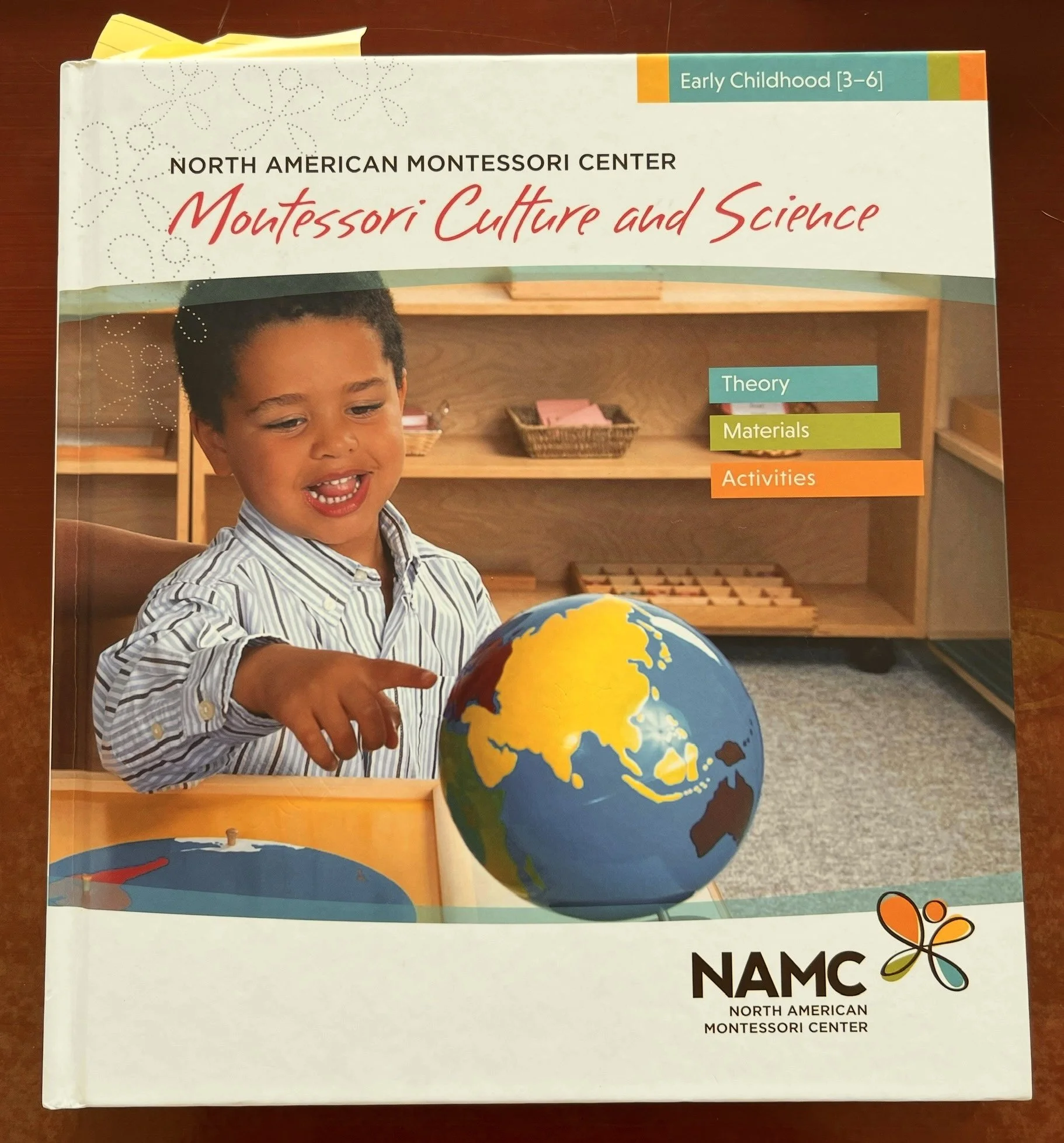
In our classroom
Our Culture and Science area follows a whole to parts approach, beginning with an understanding of the world as a whole and then studying its great variety of detail and depth. We begin with learning the names of the seven continents and four oceans, after which we explore life on each continent, including the countries that make them up. We study various landform pairs, such as island and lake, peninsula and gulf, and isthmus and strait, as well as the rich diversity of plant and animal life found on each continent. Details about these activities can be explored below.


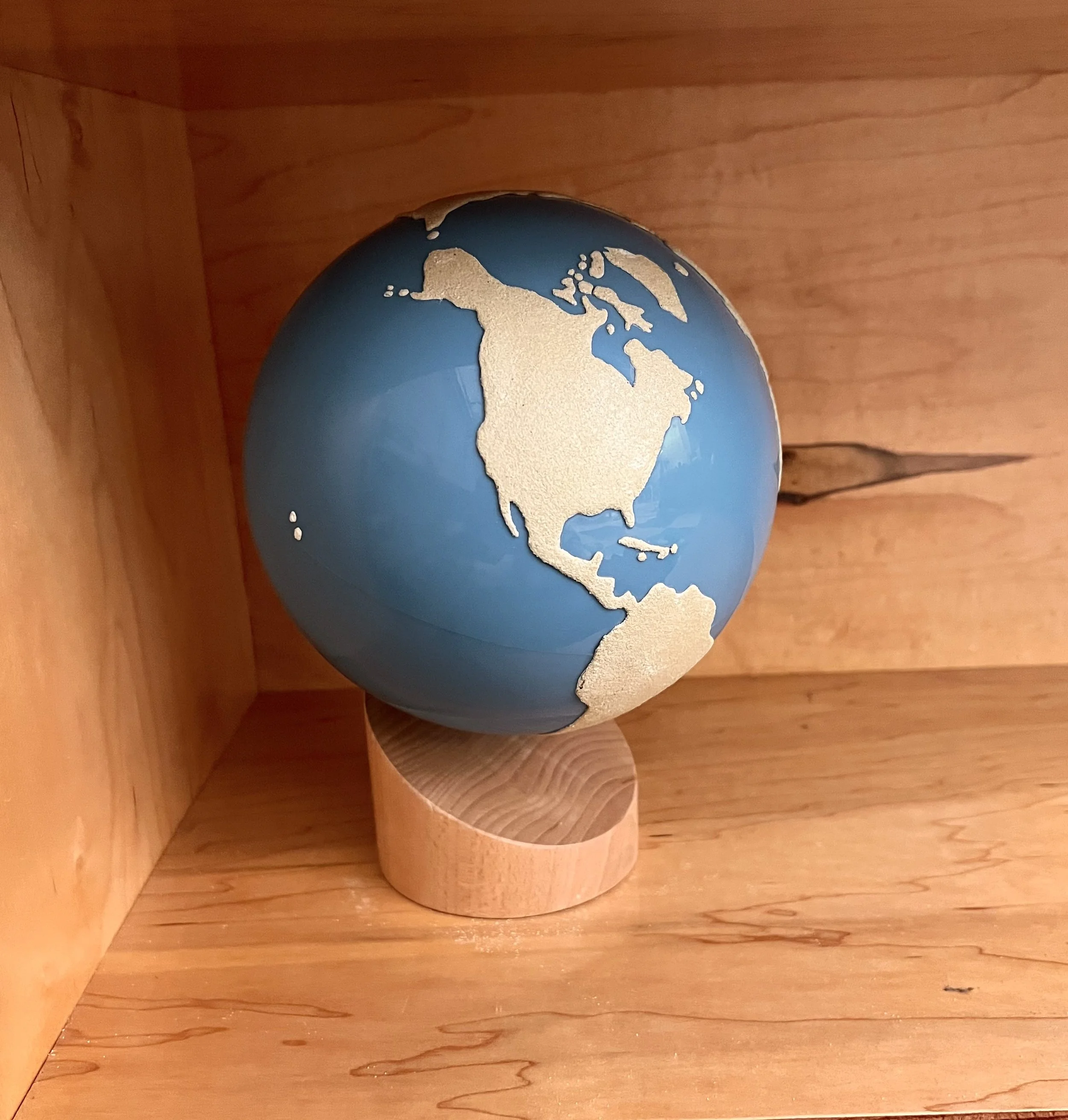

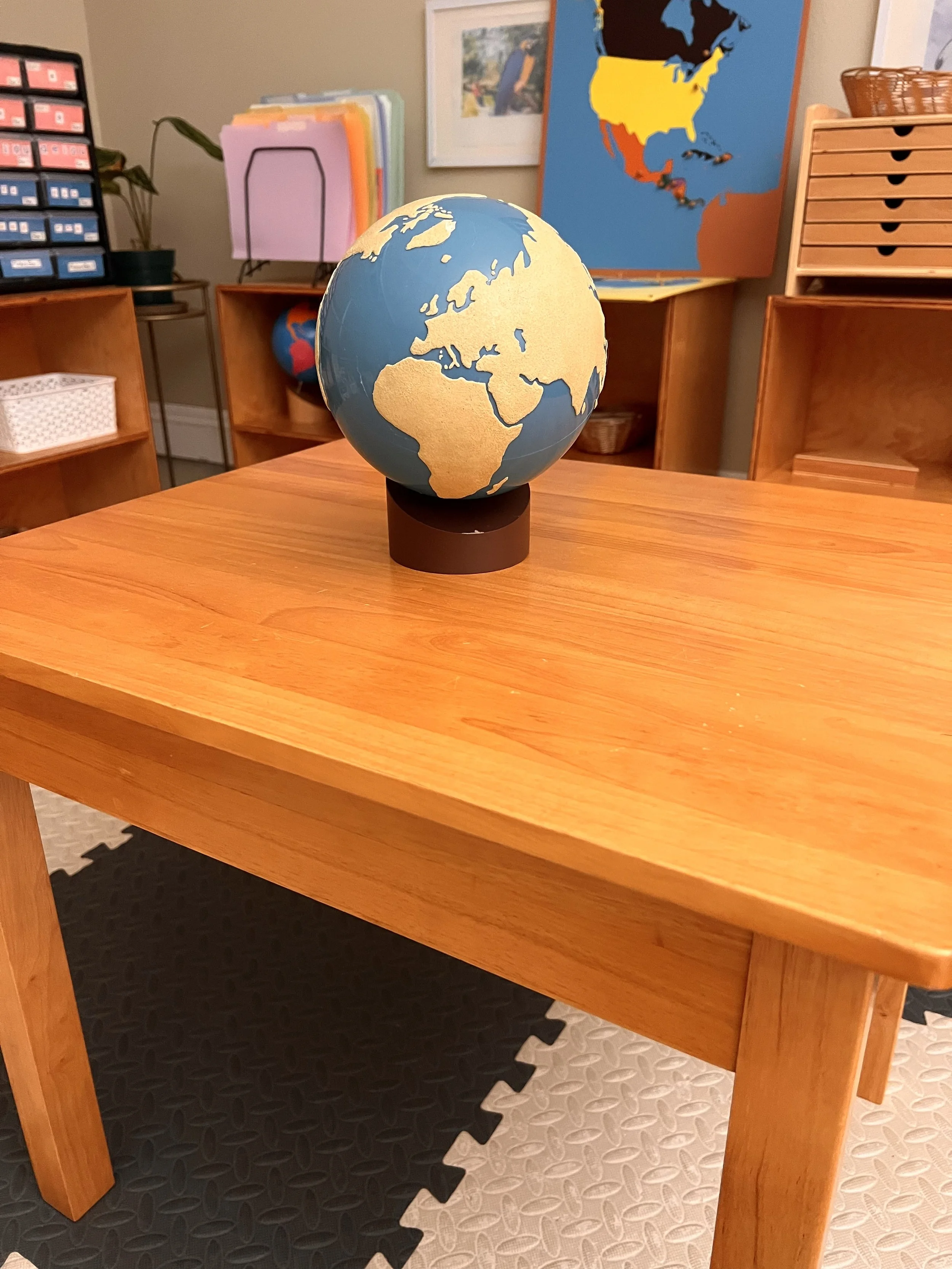
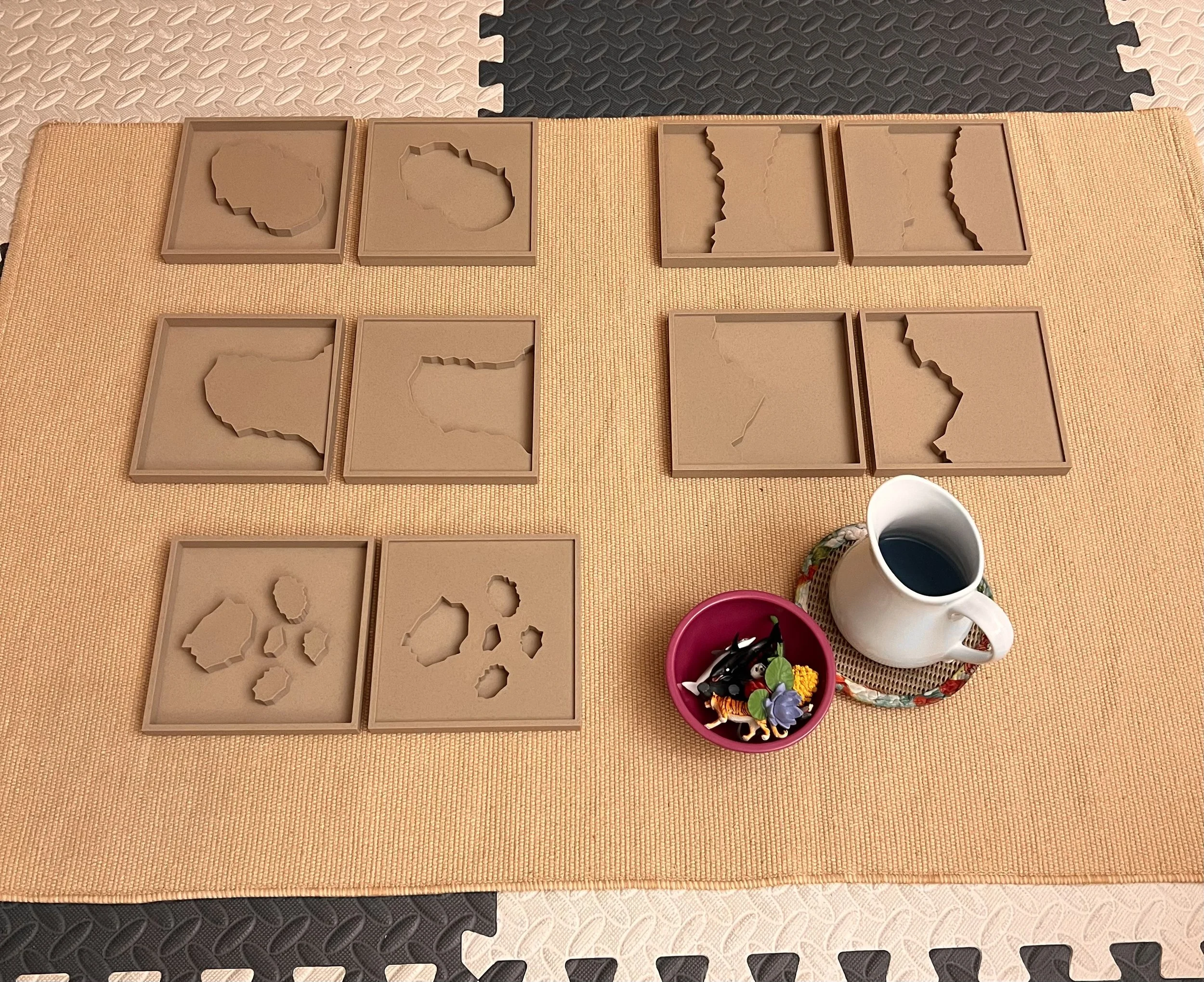
The sandpaper globe and landform materials work together to give children a concrete, sensory entry point into geography and Earth science. The sandpaper globe introduces the basic concept of land and water by allowing children to feel the contrast between rough landmasses and smooth water surfaces, helping them build an early mental map of the Earth through touch before relying on symbols or maps. From there, the landform materials extend this understanding by isolating specific geographic features—such as islands, lakes, bays, and peninsulas—so children can explore how land and water interact in more complex ways. Together, these materials move the child from broad global awareness to detailed environmental understanding, supporting vocabulary development, classification skills, and an intuitive grasp of how our world is structured.
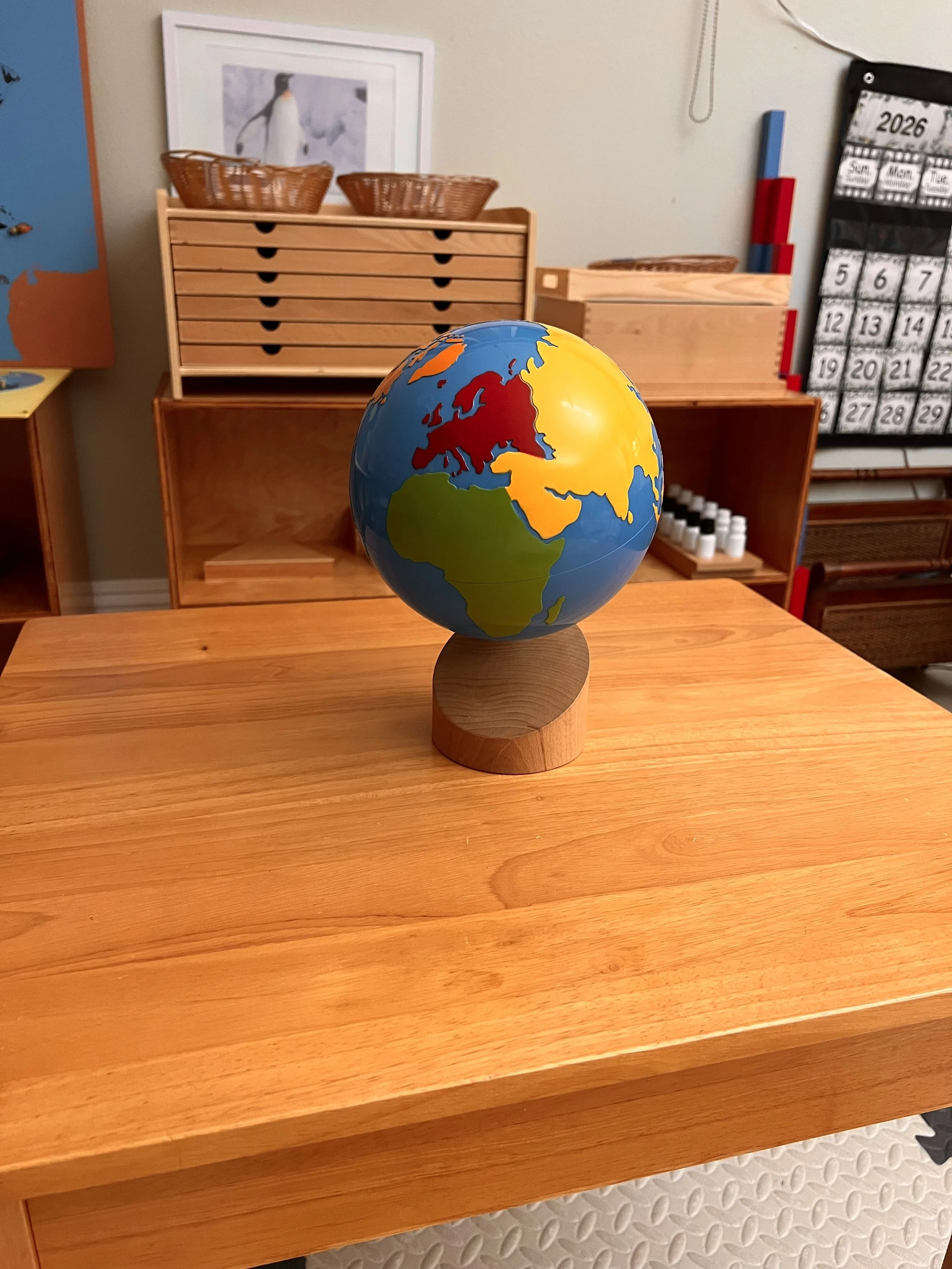
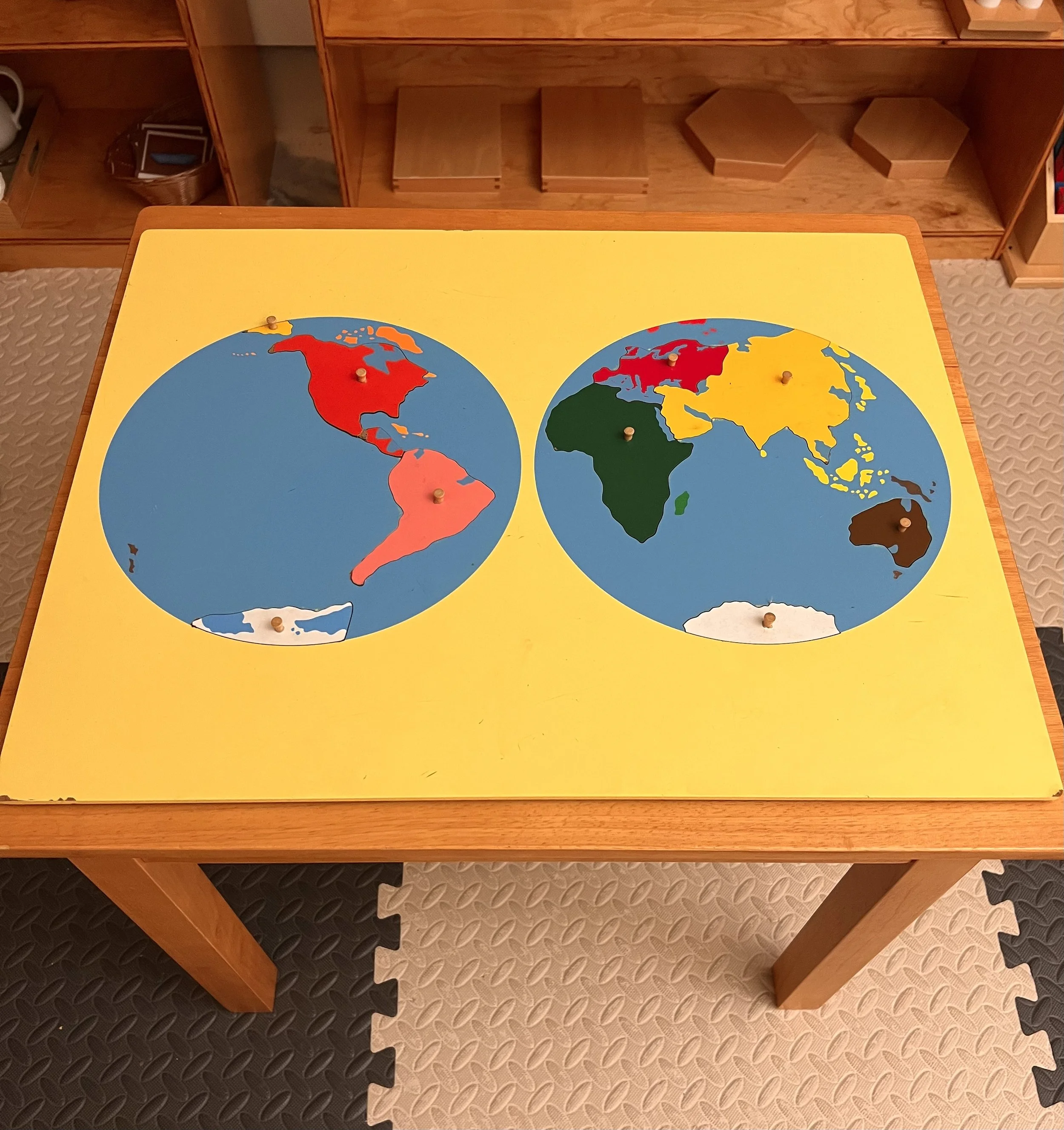
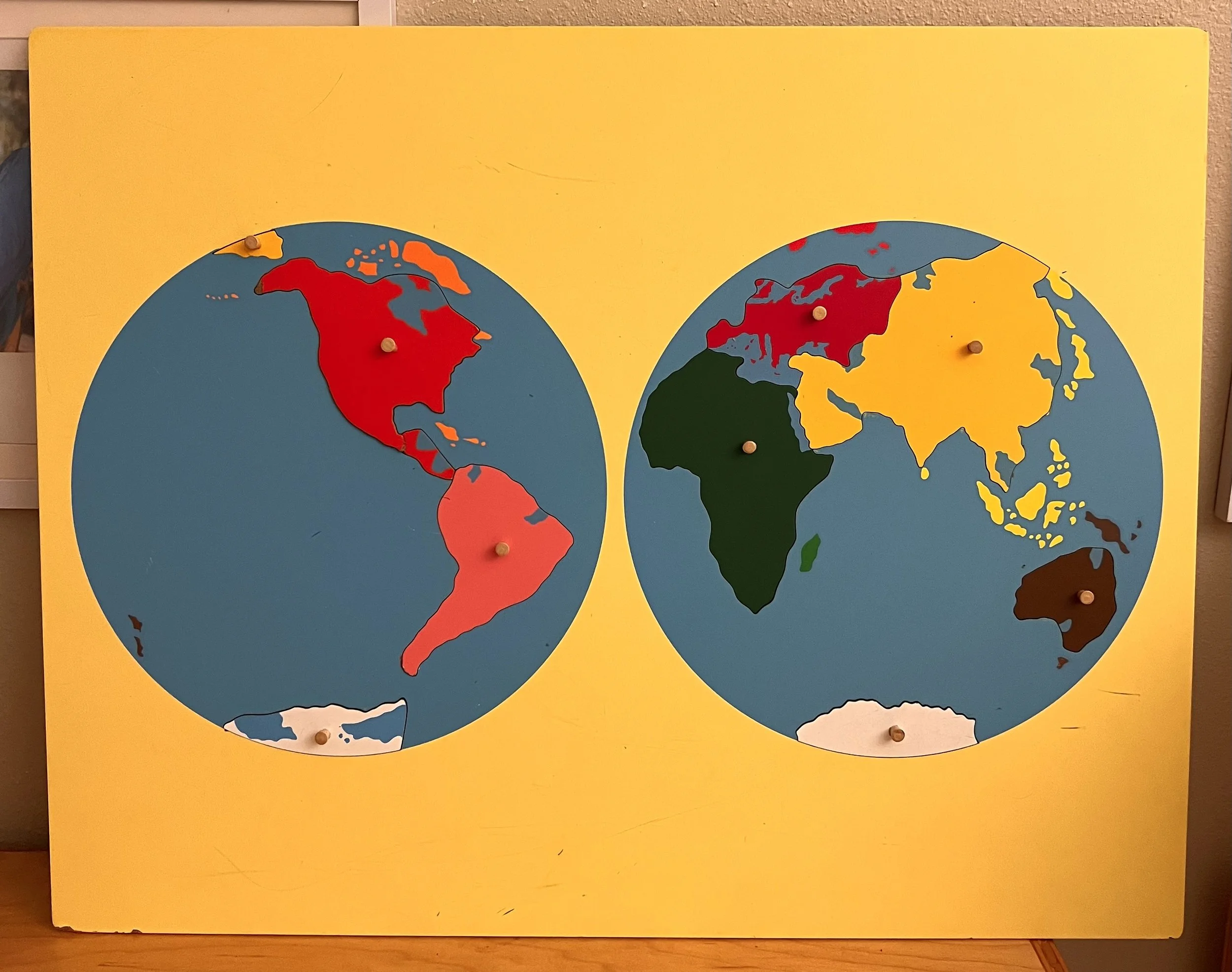
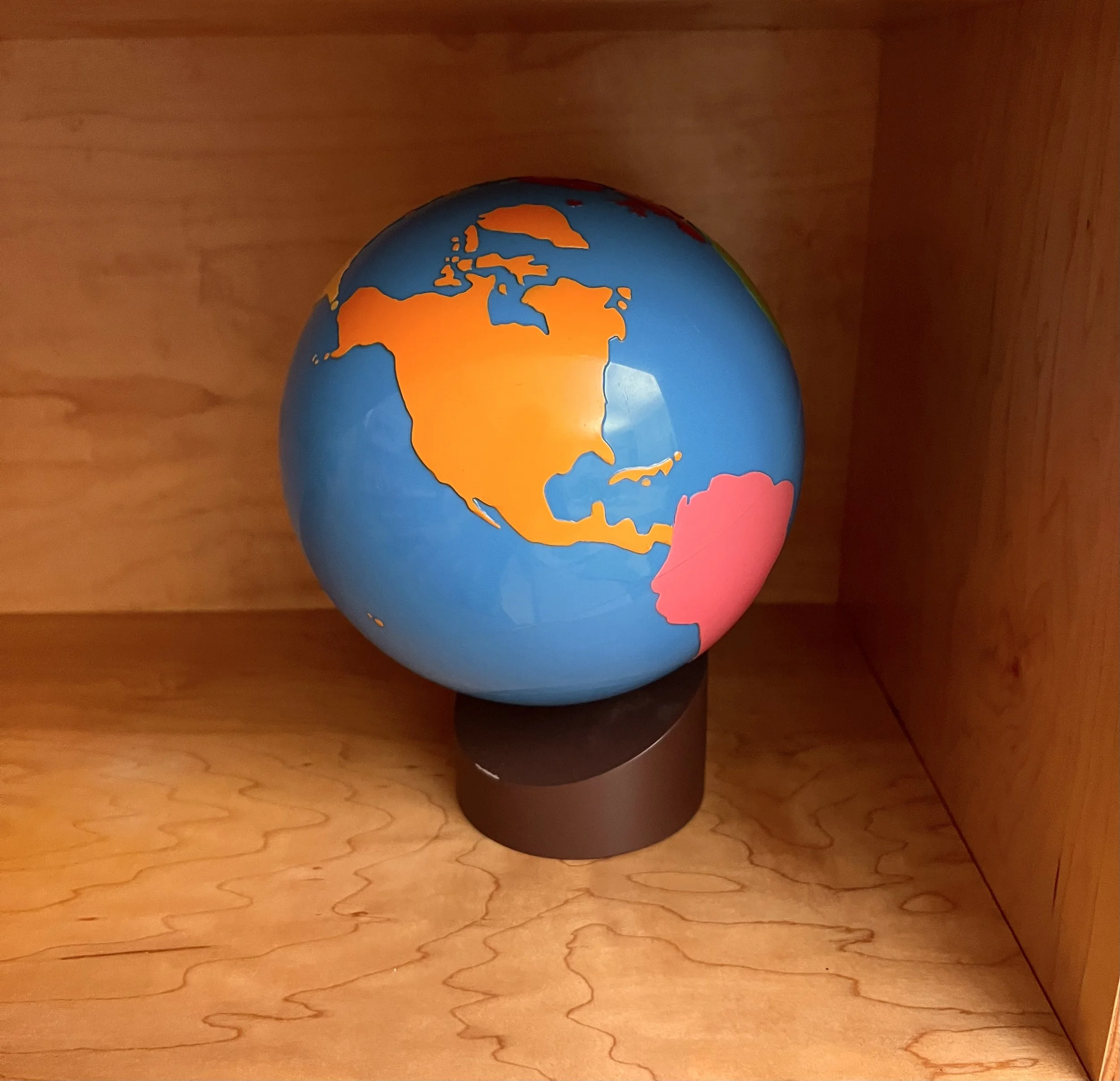
The colored globe and the continents map work together to help children understand the Earth in both a concrete and abstract way. The globe introduces each continent through distinct colors, allowing children to recognize and name major landmasses in a clear, hands-on format. The continents map then reinforces this knowledge by presenting the same information in a flat, symbolic form. Together, these materials support language development as children learn and use geographic vocabulary in context. They also build early math and thinking skills such as spatial awareness, visual discrimination, and the ability to interpret and connect different representations of the same information.
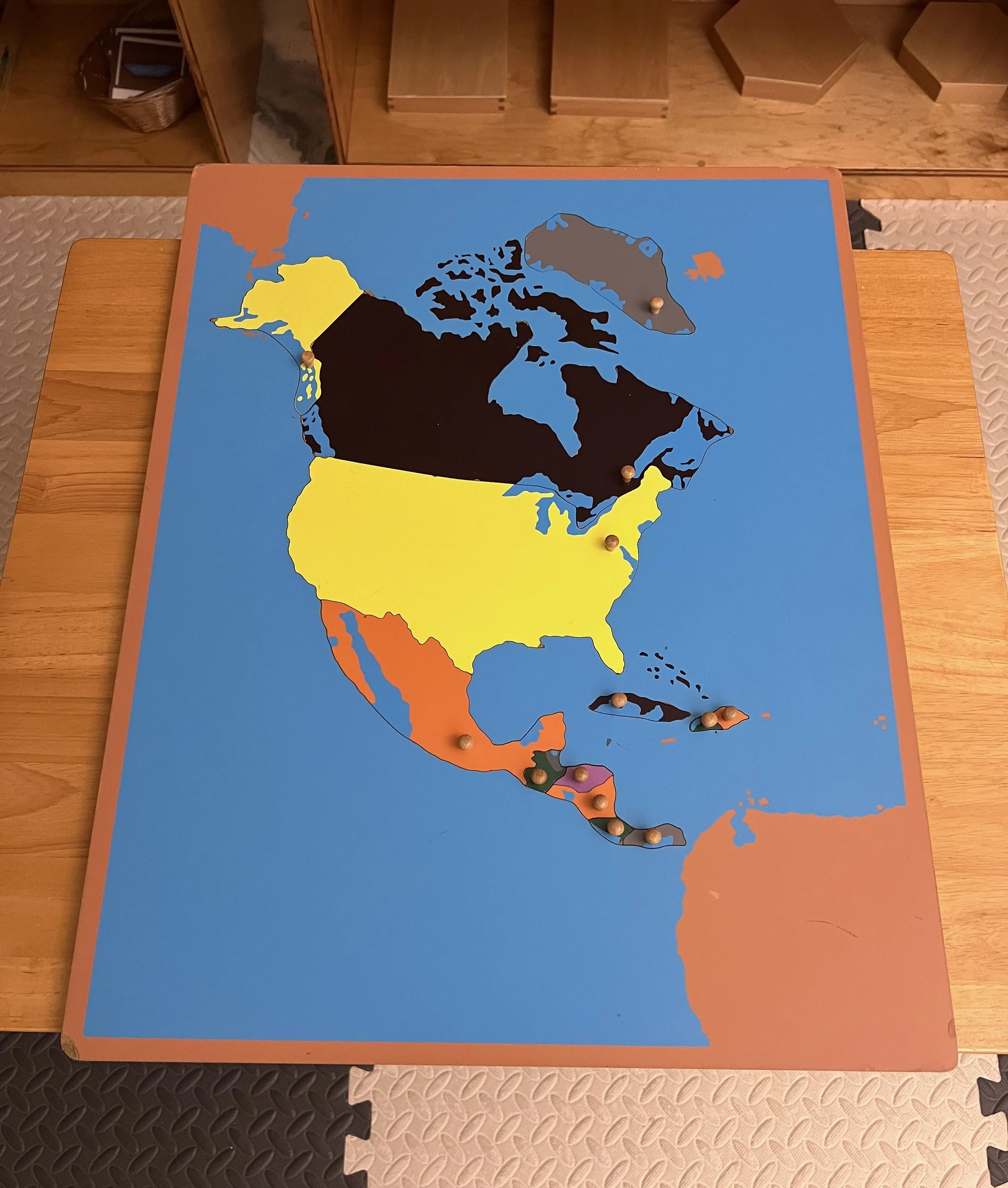
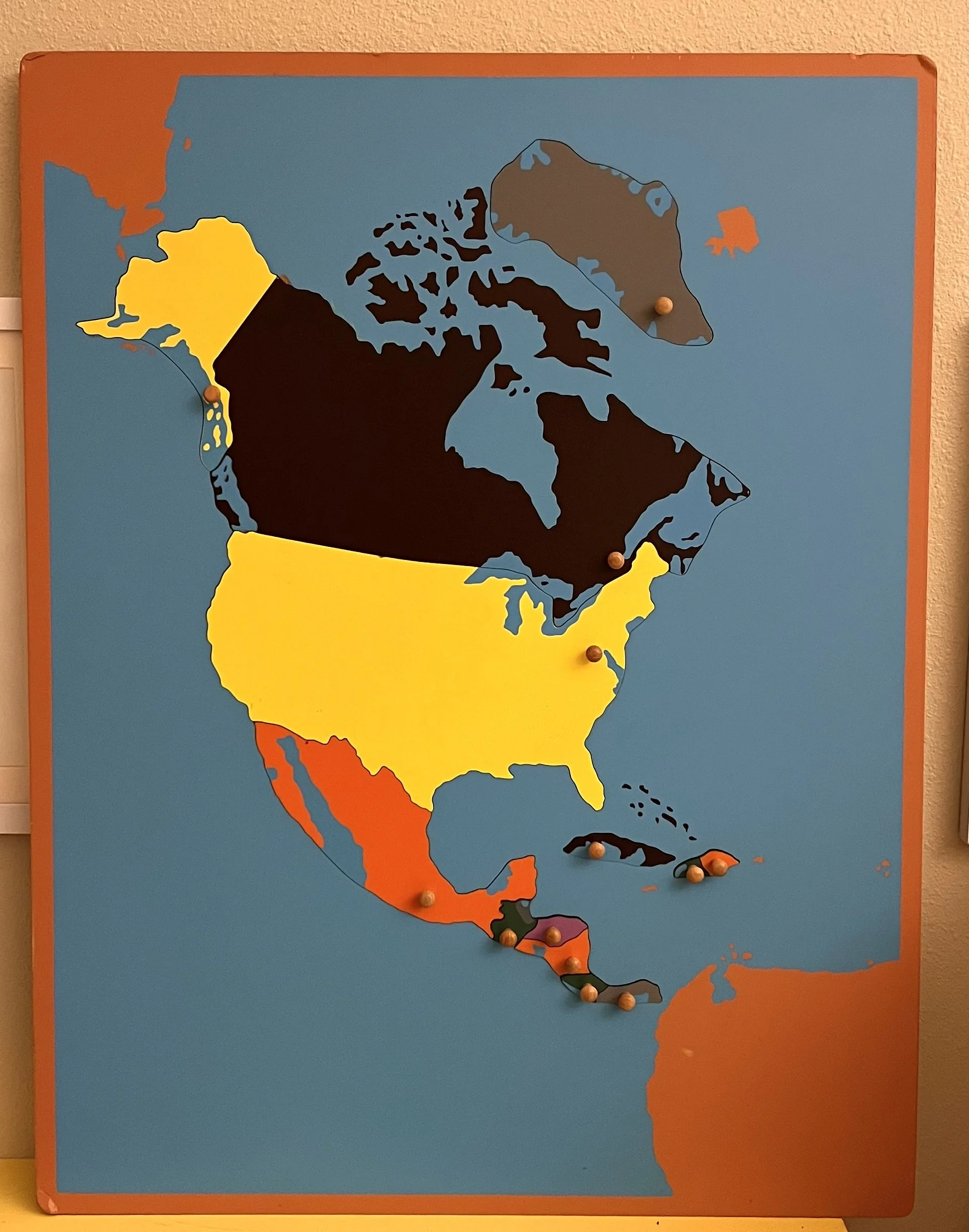
The North America puzzle map helps children take the next step after learning the continents by zooming in from the whole world to a focused study of one region. After working with the globe and continents map, children begin to see that each continent is made up of smaller parts, and the puzzle map makes this idea concrete by allowing them to physically assemble the countries of North America. This hands-on work strengthens their understanding of how a large system is organized into smaller, connected pieces. It also supports language development as children learn country names and begin to describe their locations and relationships. At the same time, it builds early math and thinking skills such as spatial reasoning, sequencing, and part-to-whole relationships.
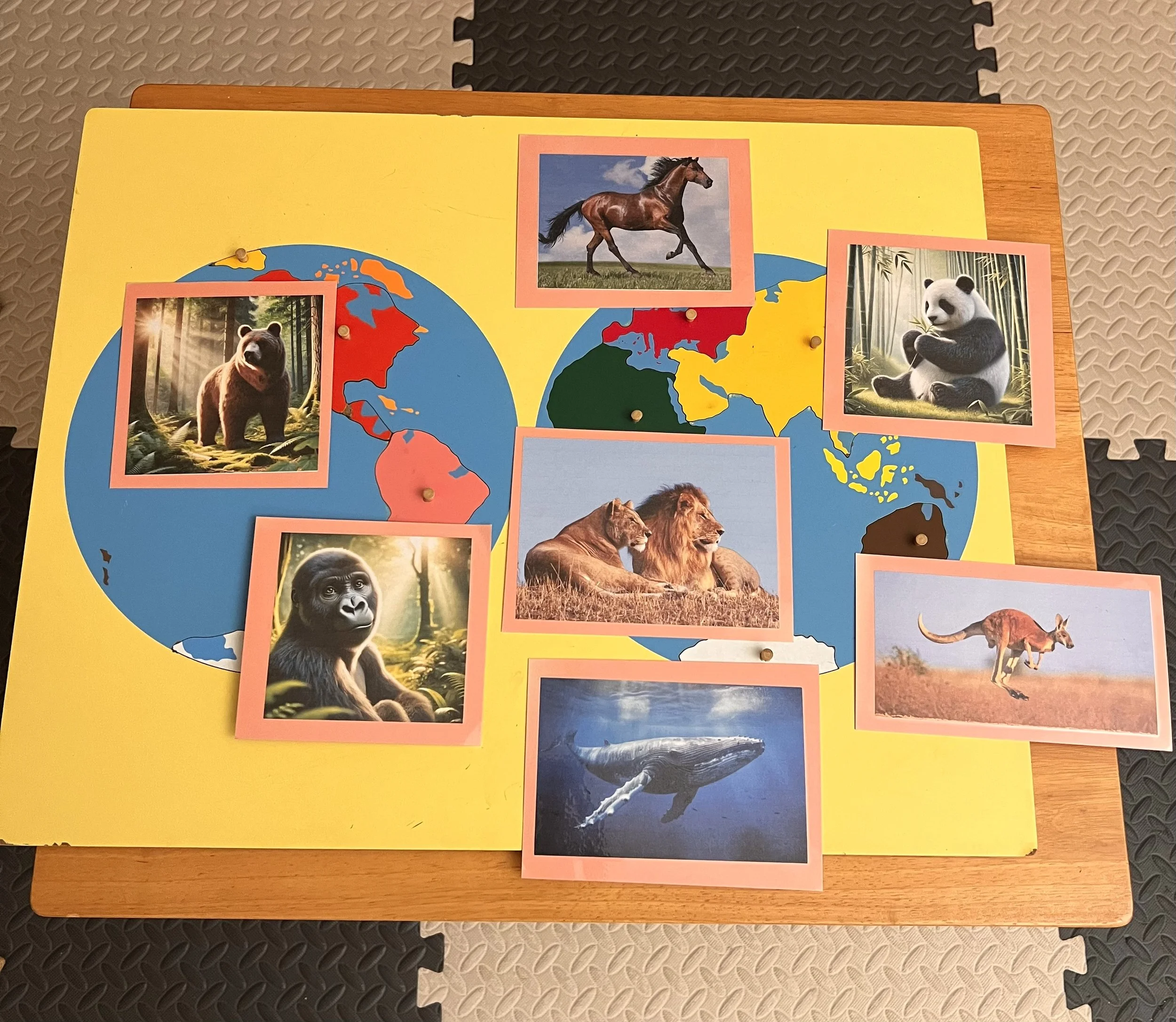
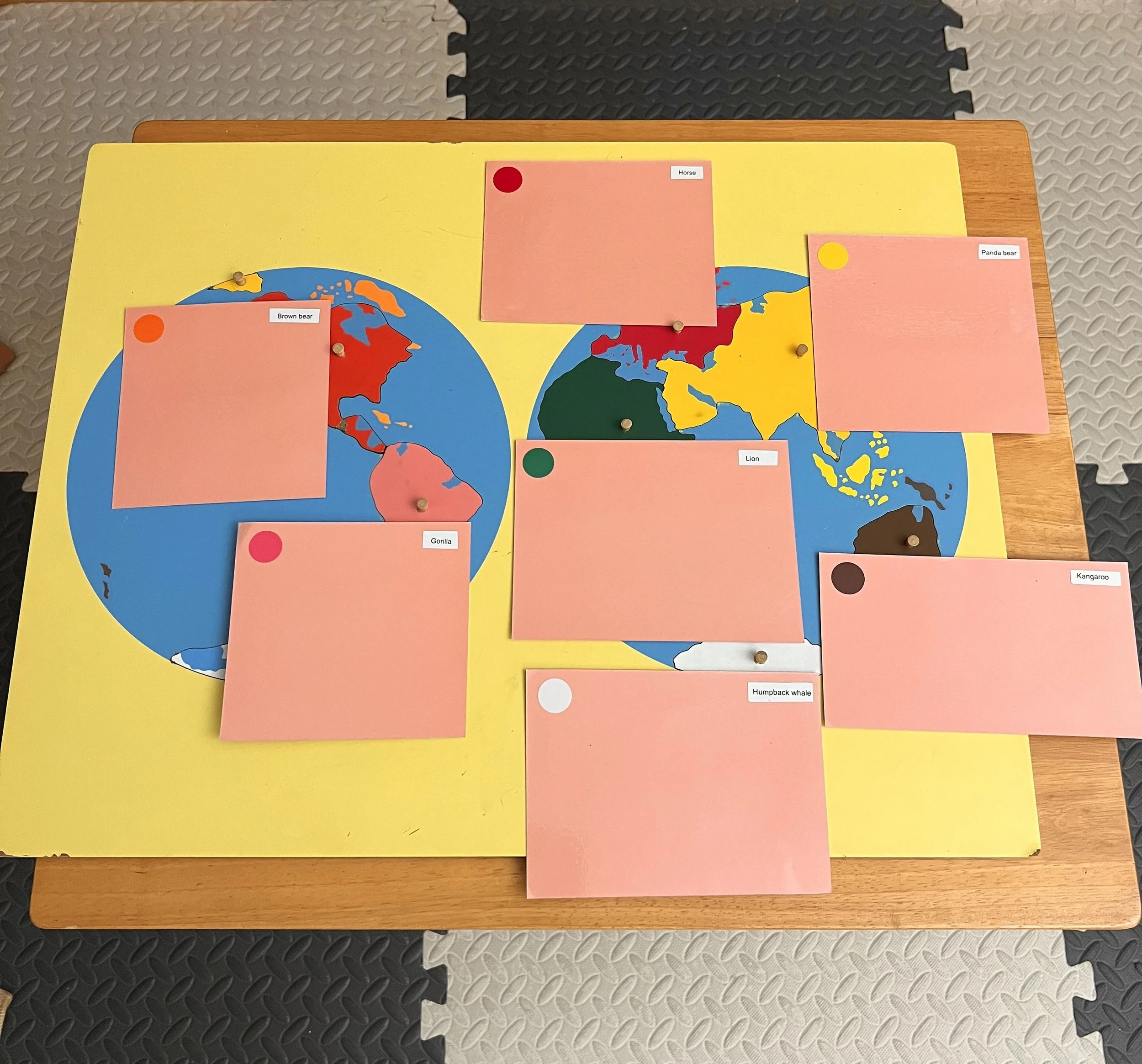
The world puzzle map with matching continent components helps children connect geography with real-world knowledge in a meaningful, hands-on way. After learning the continents, children begin matching related items—such as animals—to each continent, helping them see how different environments support different forms of life. This deepens their understanding of the world while strengthening classification and observation skills.
The activity also encourages independence through a built-in control of error, where color stickers on the back allow children to check their own work without adult correction. This supports self-confidence, focus, and responsibility in learning. In addition, it builds transferable skills in language through new vocabulary and descriptive discussion, and in math through sorting, categorizing, and recognizing relationships between groups and regions.
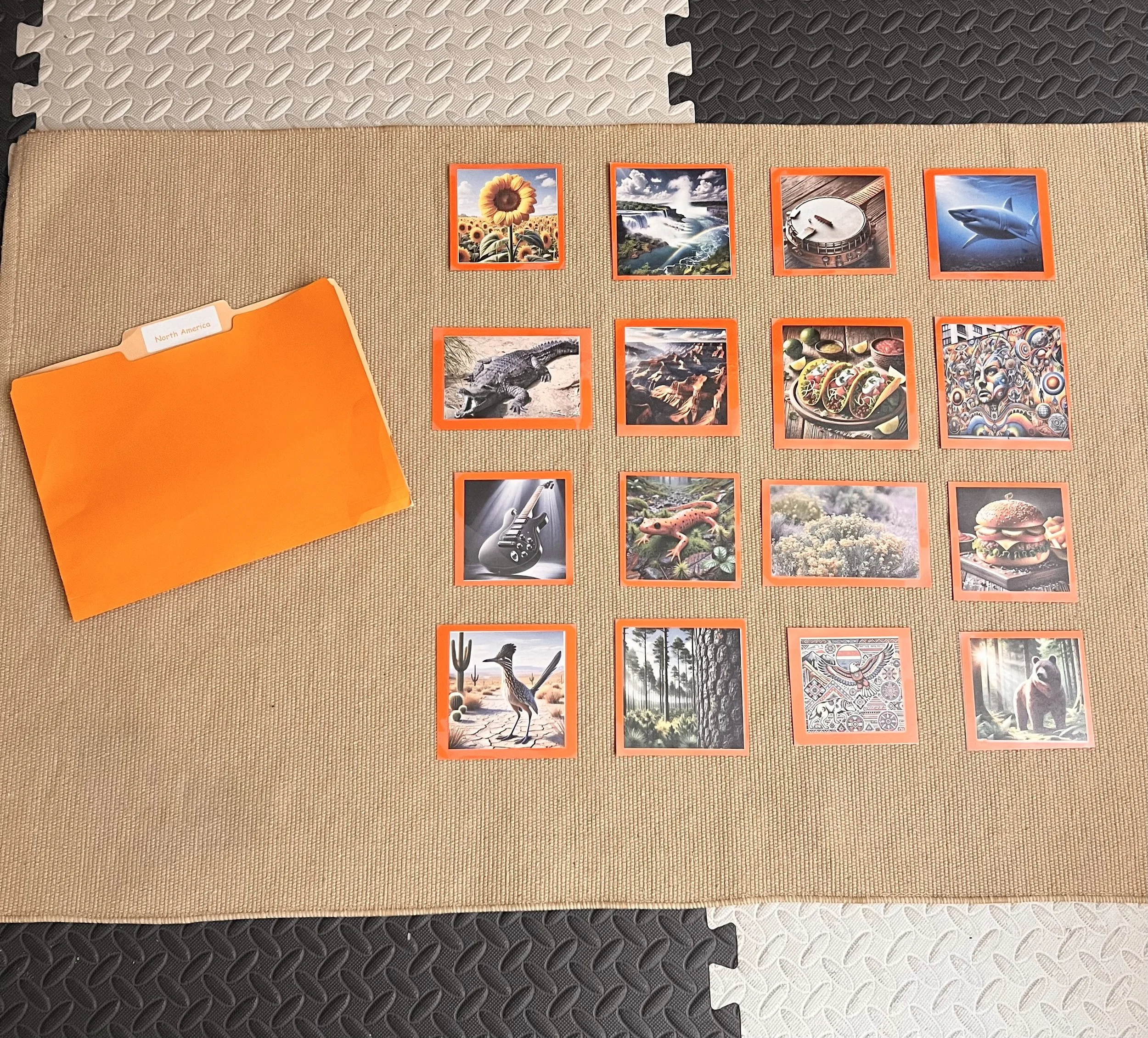
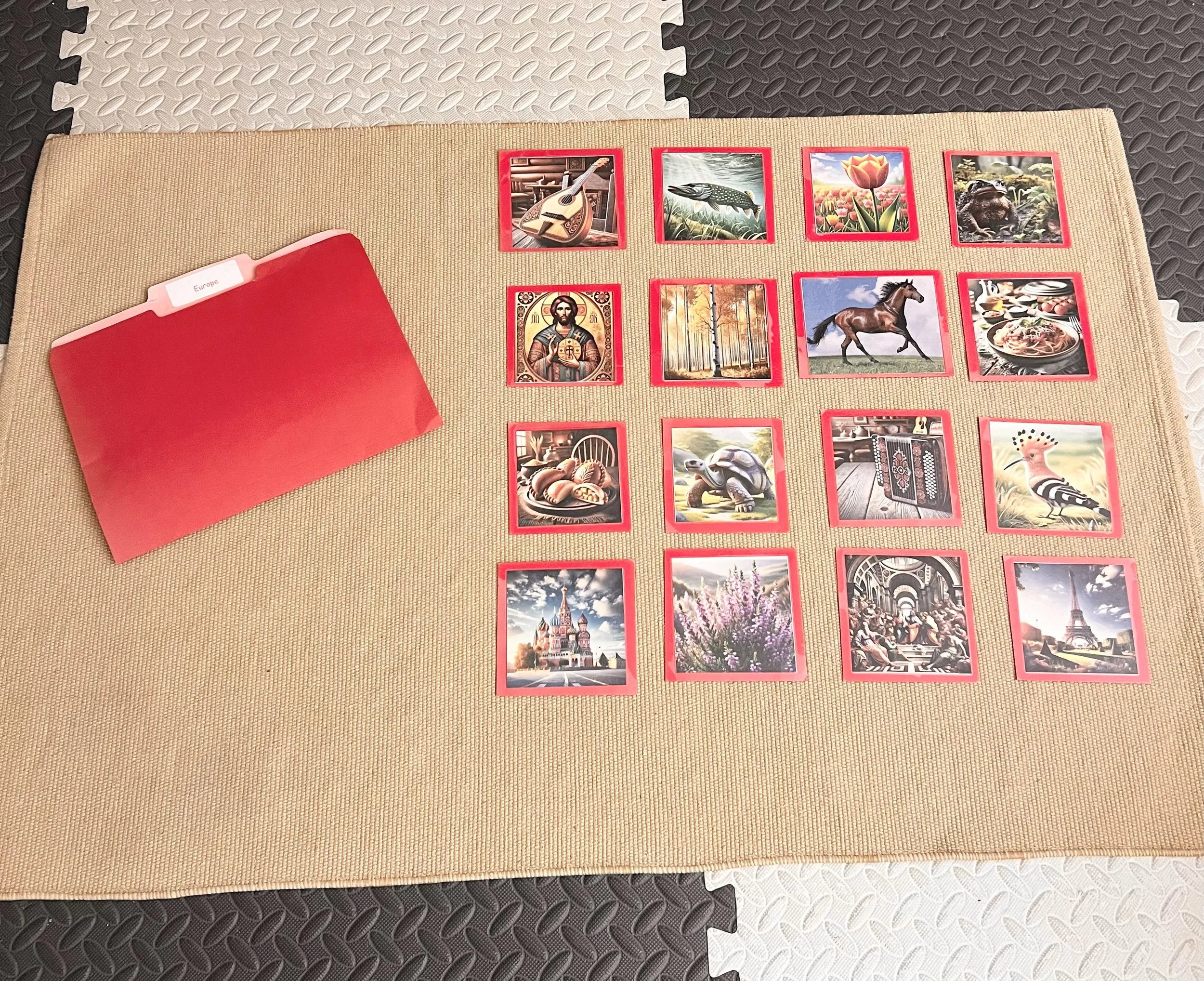
The continents folders give children a deeper, more cultural understanding of the world by exploring what makes each continent unique beyond its shape and location. Each folder includes carefully selected items such as animals, plants, music, food, and landmarks, allowing children to see how geography connects to real life and human experience. For example, in the North America and Europe folders, children can compare familiar and new elements across different categories, helping them notice similarities and differences between regions.
This work strengthens early classification and critical thinking as children sort and group information in meaningful ways. It also builds language development through rich vocabulary connected to culture, nature, and geography. At the same time, it supports early math thinking by encouraging comparison, categorization, and pattern recognition as children organize information across continents.
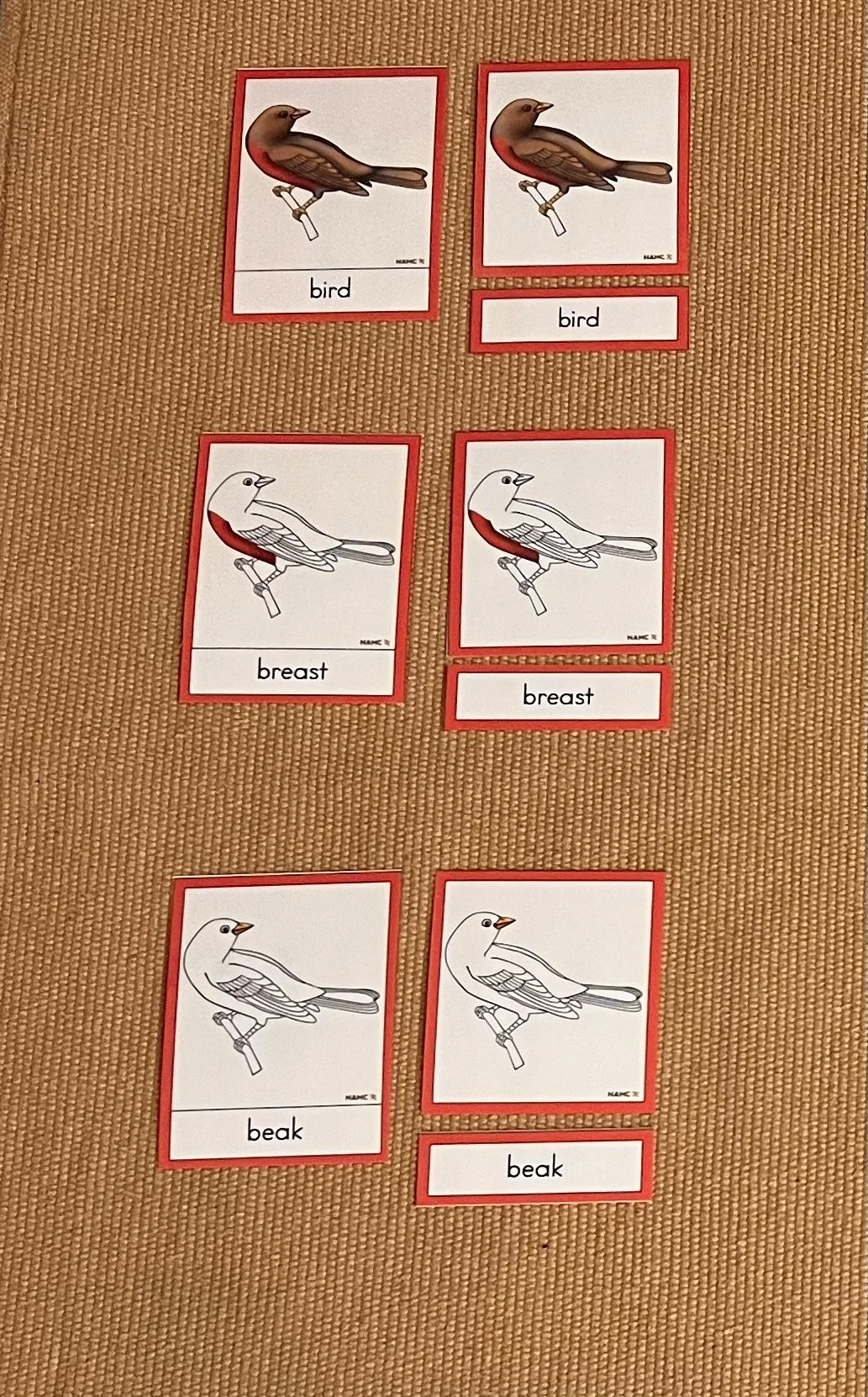
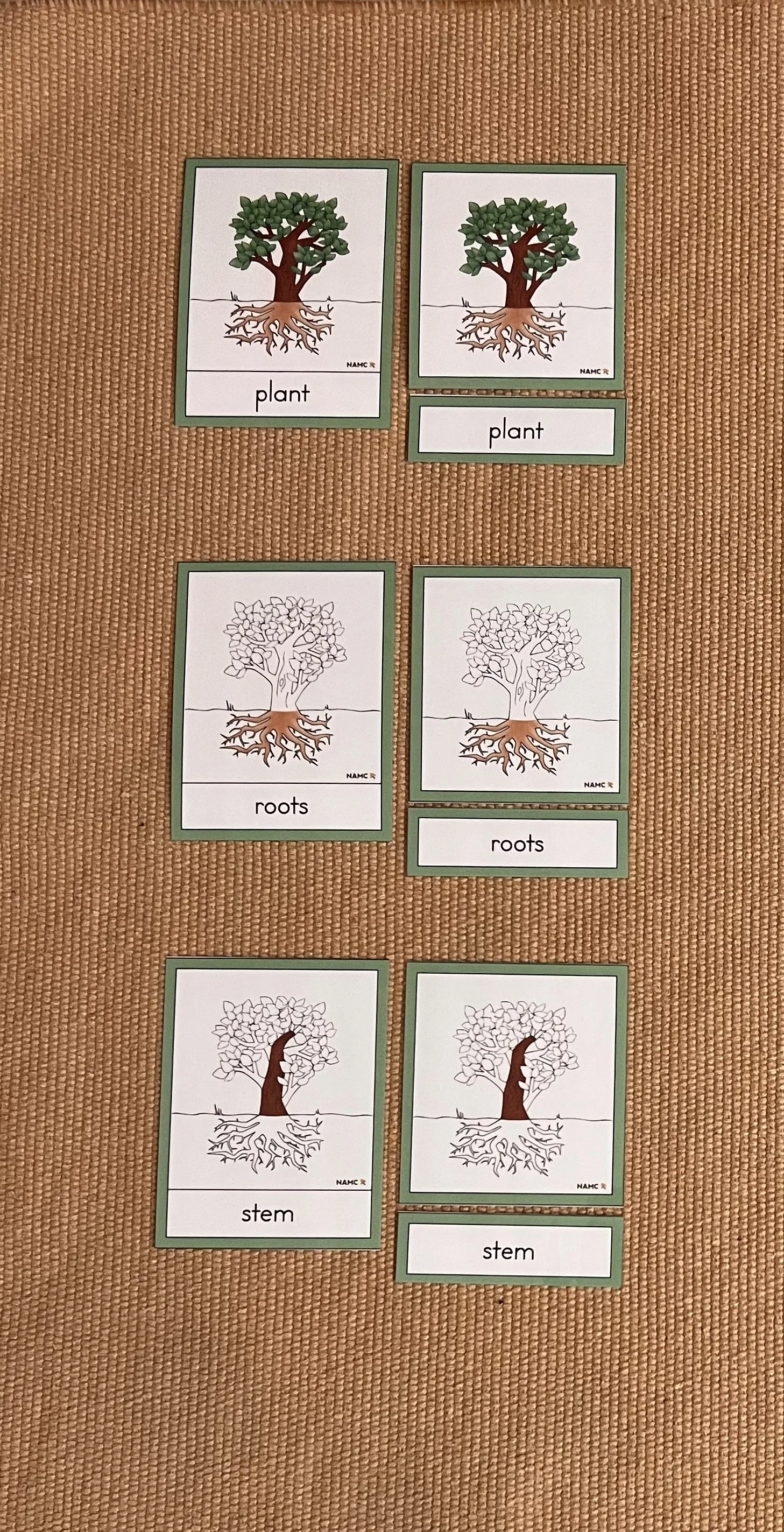
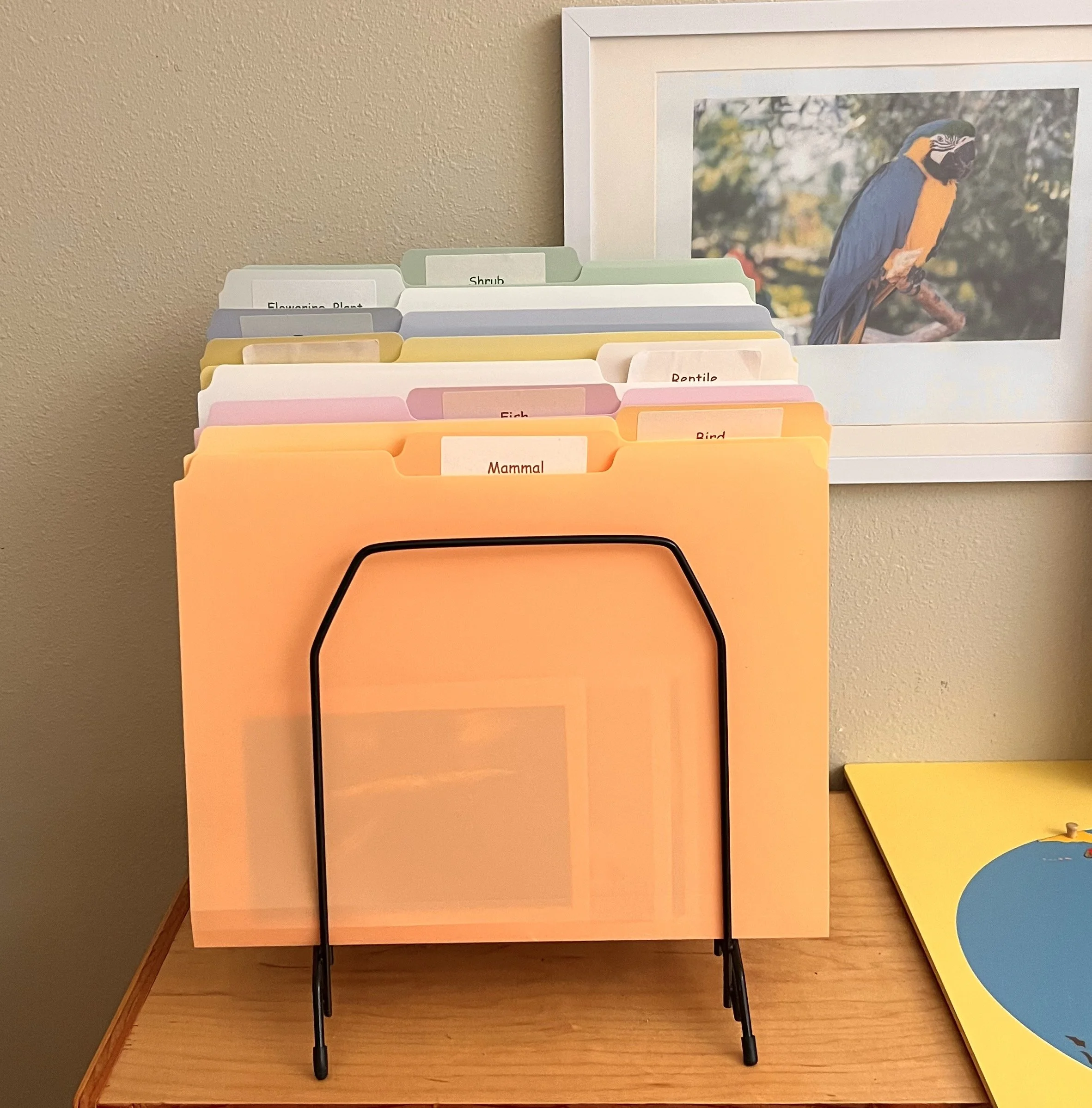
The nomenclature materials for birds, plants, mammals, reptiles, fish, and amphibians, along with plant parts like root, stem, flower, and fruit, give children clear, organized language for understanding the natural world. These materials help children move from simply observing living things to being able to name, classify, and describe them with accuracy and confidence. By working with real images and matching labels, children build a strong connection between words and concepts in science.
This work also strengthens foundational language skills, including vocabulary development, reading readiness, and expressive communication. At the same time, it supports early cognitive skills such as categorization, comparison, and attention to detail, which are important in both science and math. Overall, these materials help children develop a deeper respect for living things while building the language and thinking skills needed for more advanced learning.
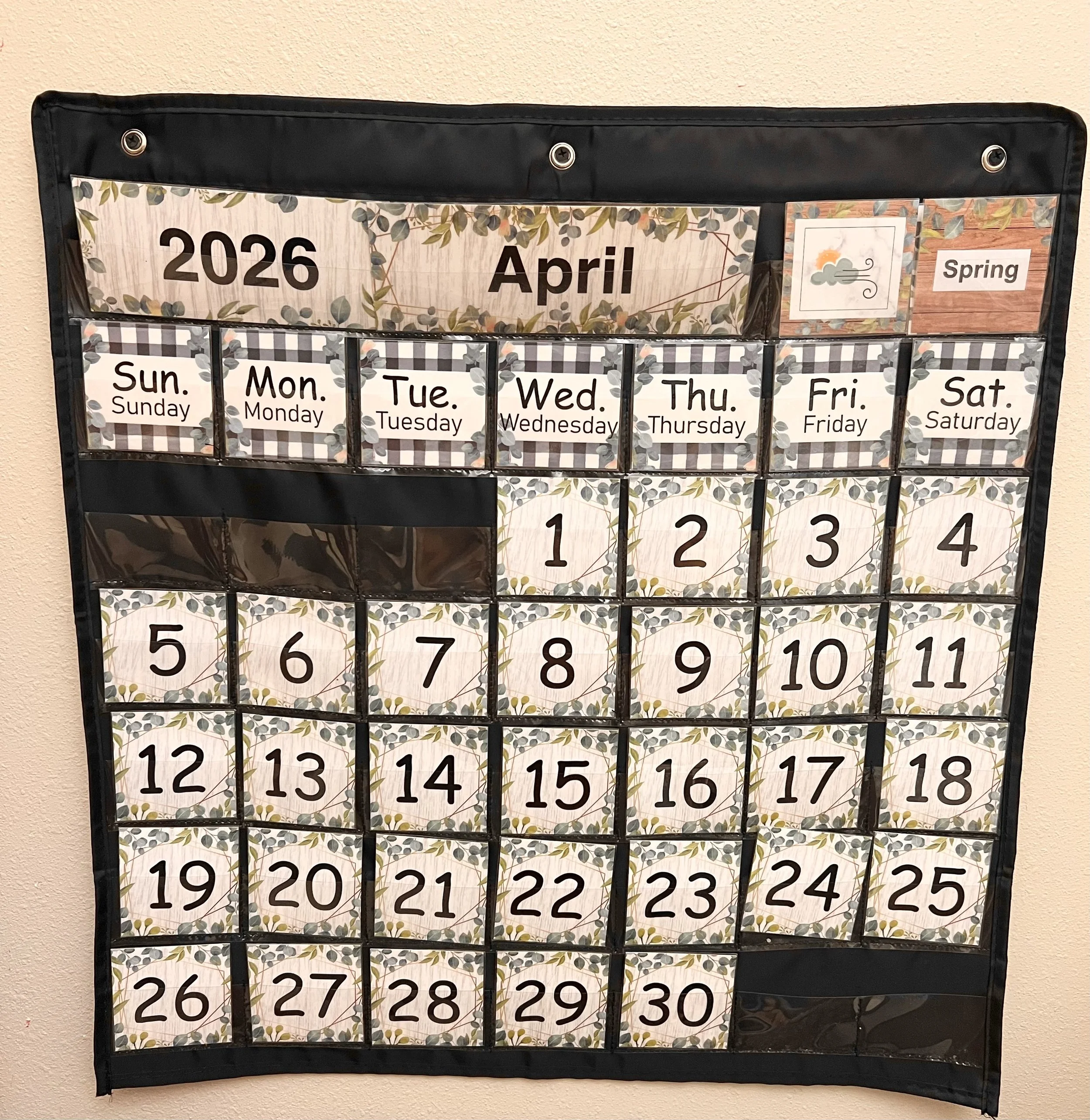
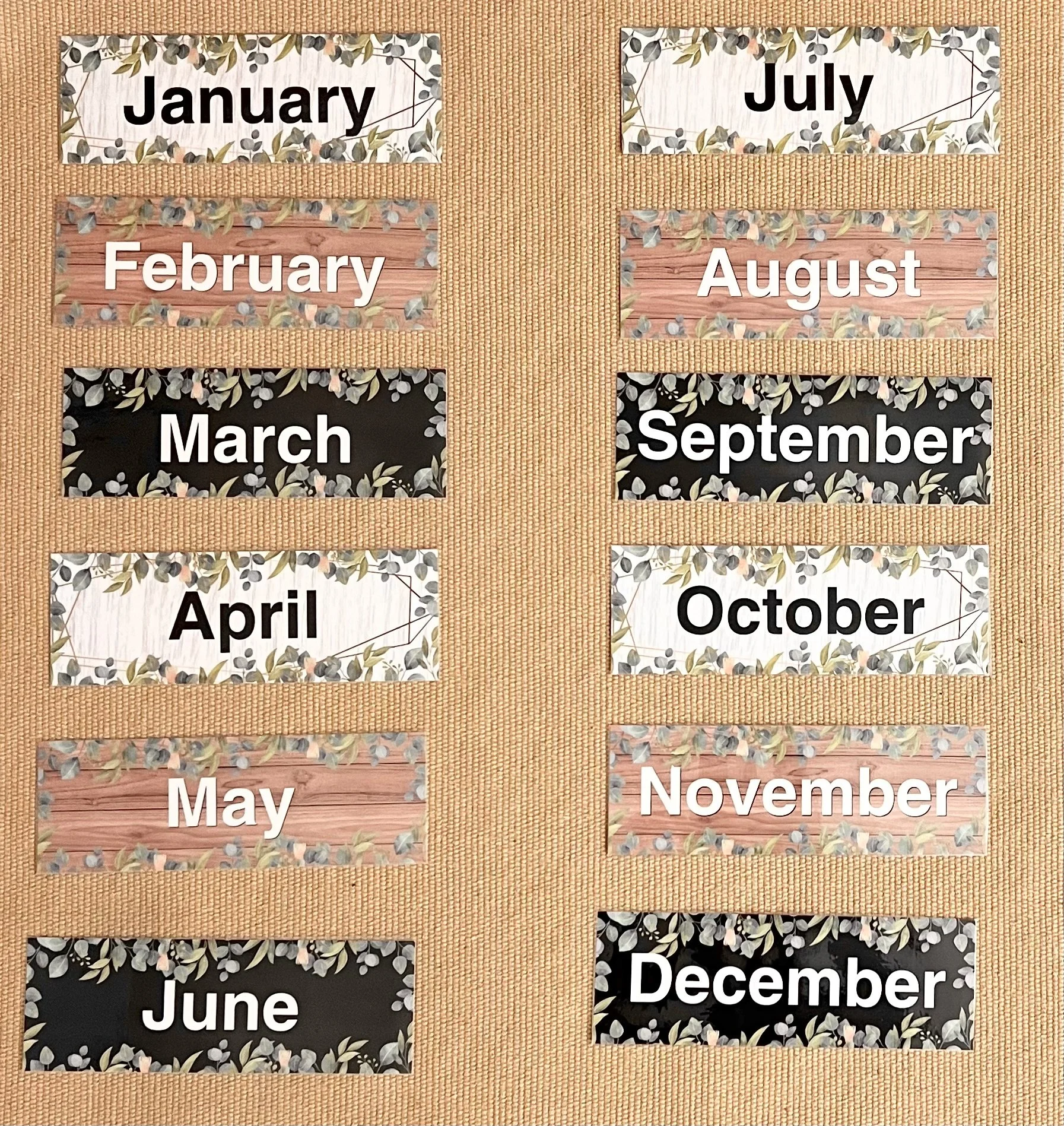
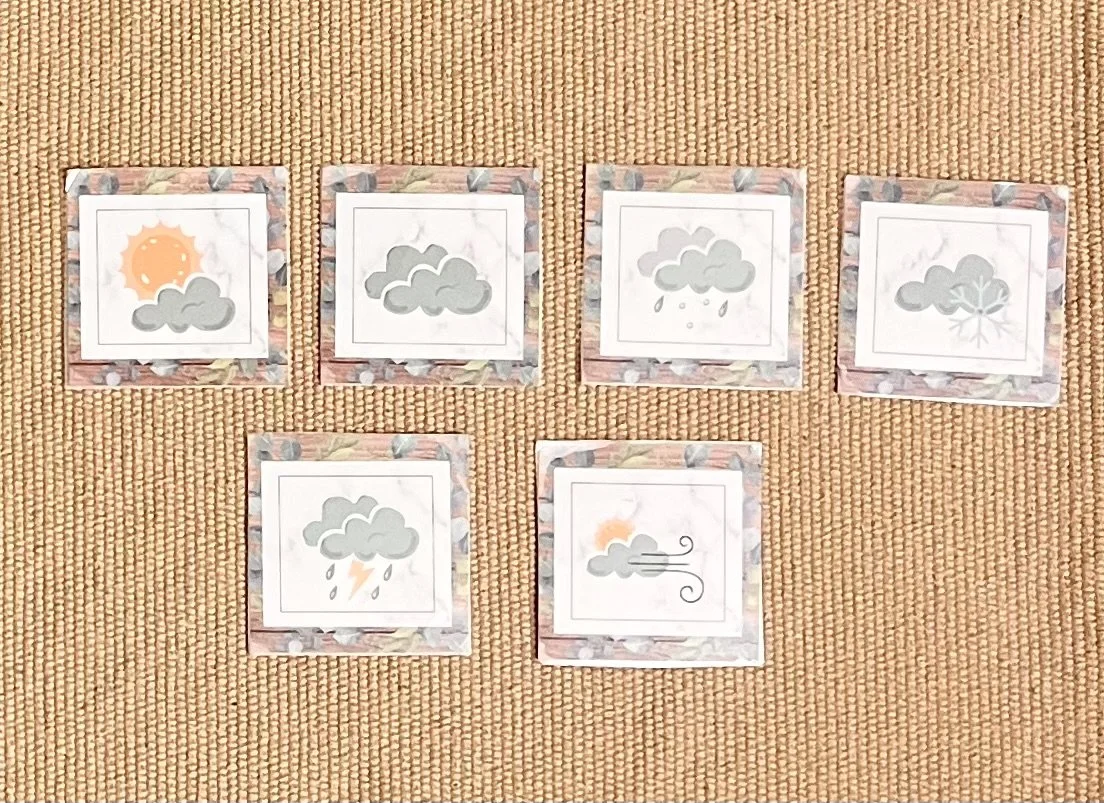
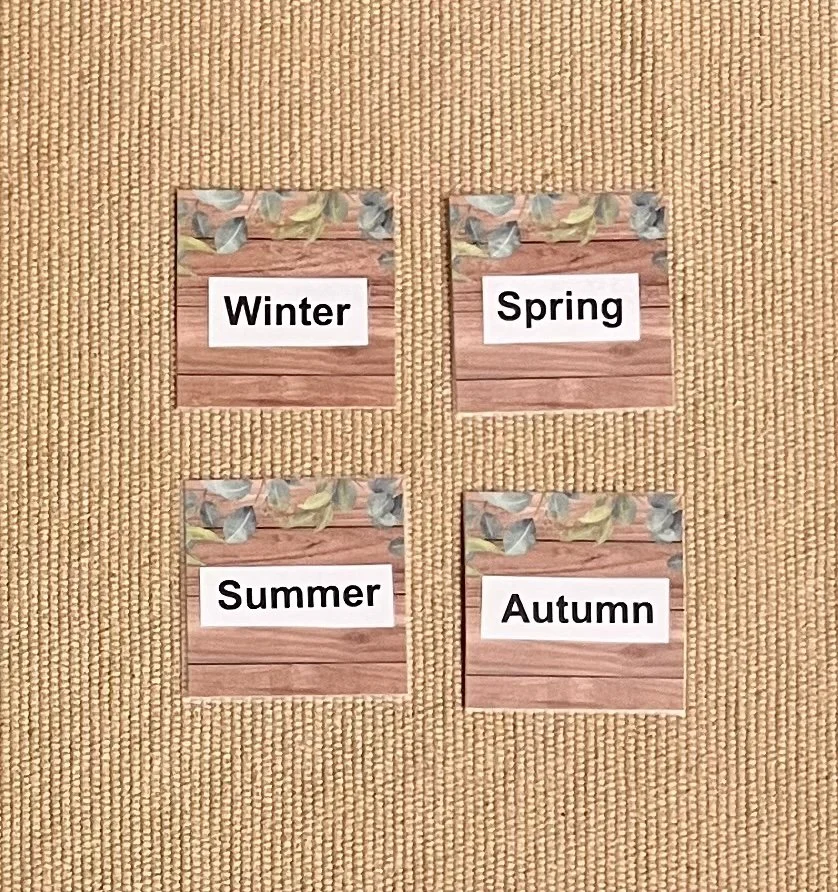
The calendar work helps children understand how time is organized and how it connects to their everyday lives and the wider world. Through daily use, children learn the days of the week, months of the year, numbers, and how they fit into a predictable sequence. It also introduces larger concepts of time, such as years, seasons, and how they change in a repeating cycle.
Weather tracking is included as part of this routine, helping children observe and record changes in their environment over time. In addition to time awareness, this work builds early historical thinking by helping children understand that events happen in order and are connected to specific points in time. It also strengthens math skills through counting, number recognition, patterning, and sequencing. Overall, the calendar gives children a concrete way to experience abstract time concepts while building strong language, observation, and organizational skills.