Russian Language
The Russian Language Curriculum is designed to support natural language development through a Montessori-inspired, immersion-based approach. Children build vocabulary, comprehension, and communication skills through meaningful exposure to spoken Russian, supported by songs, stories, and hands-on learning experiences. As they progress, early reading and writing are introduced in a developmentally appropriate and structured way.
In our classroom
Here are some examples of materials children will have the opportunity to engage with during our program. These activities will help them grow and develop their oral, reading, and writing skills in Russian.
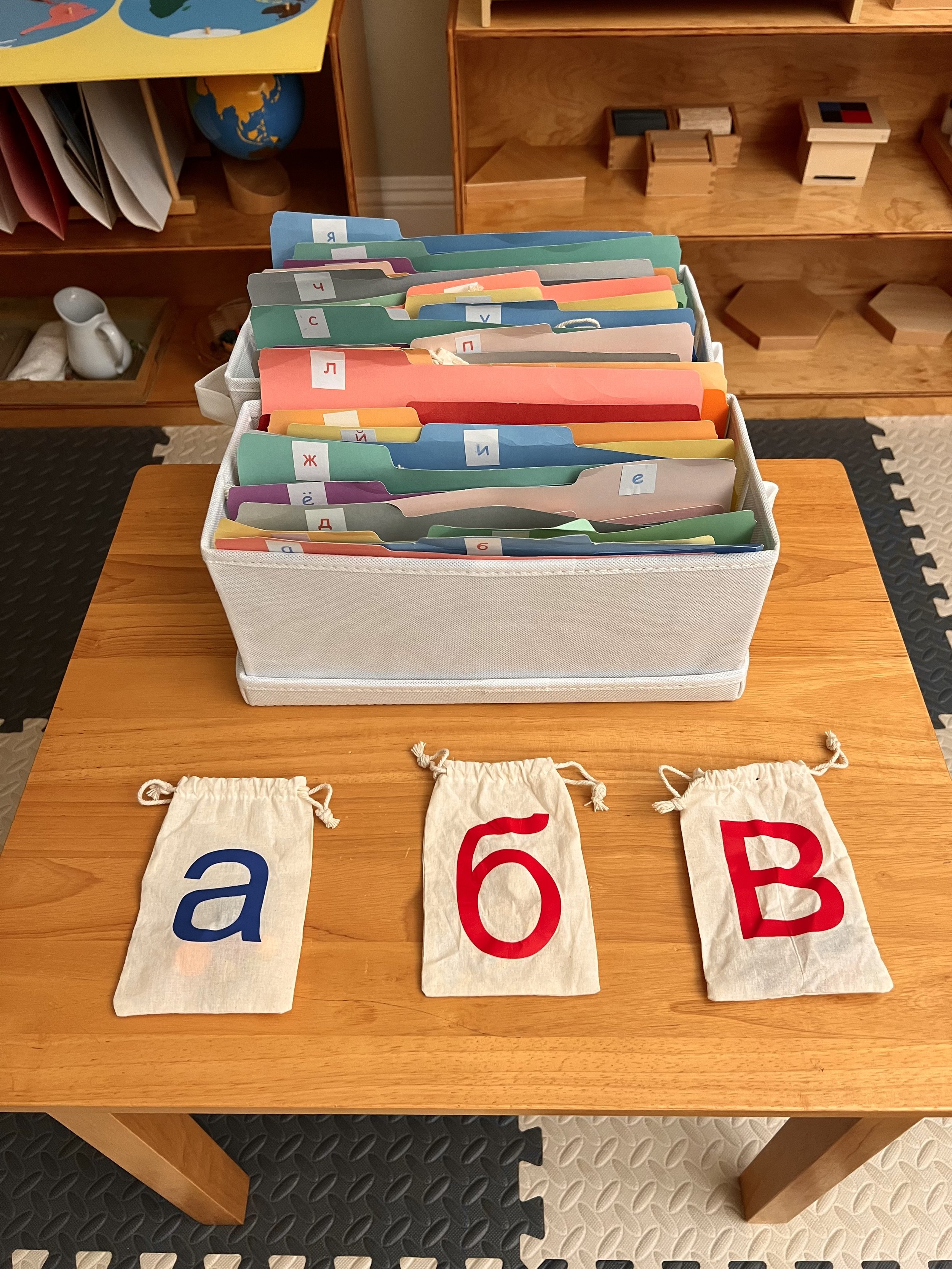
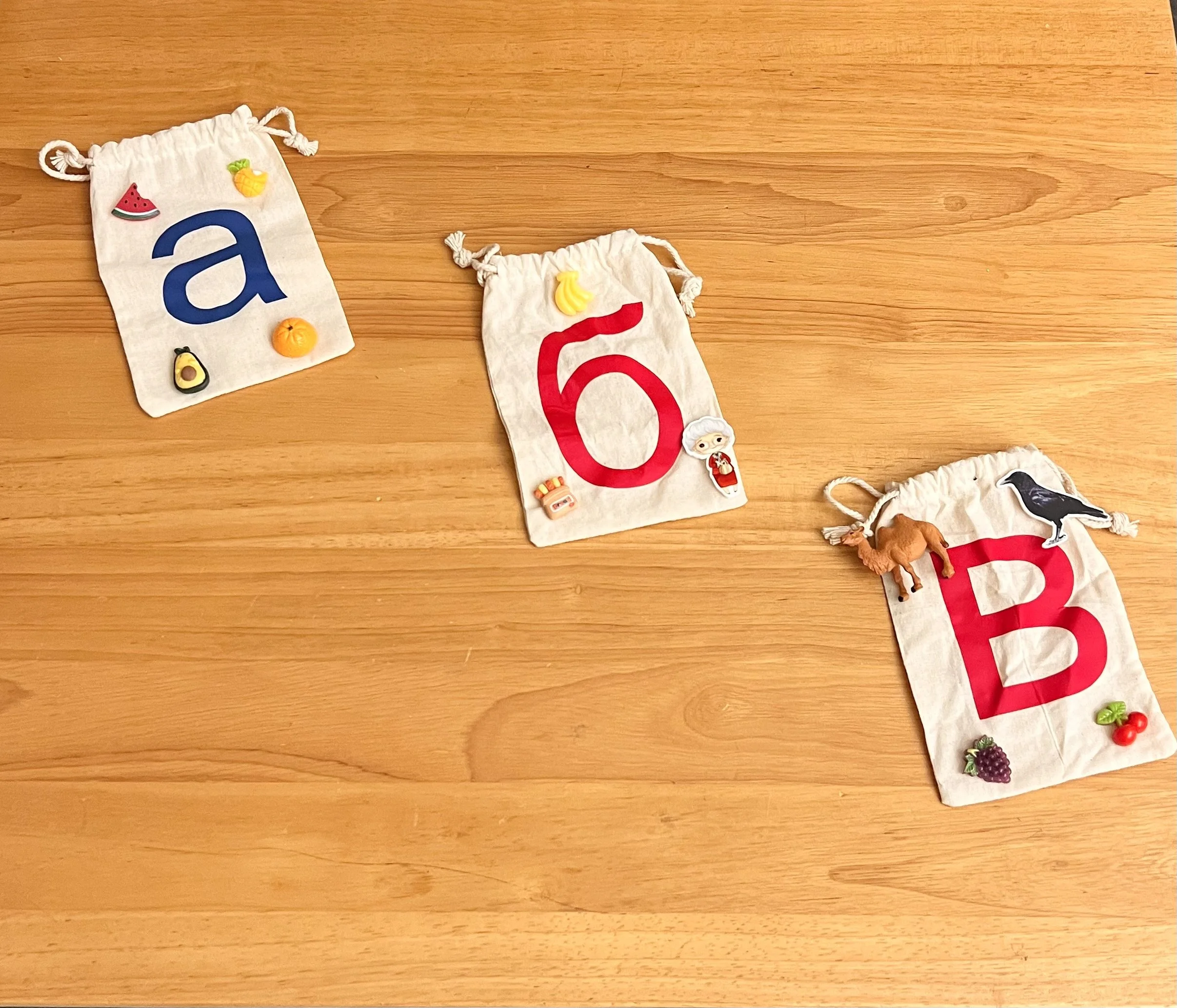
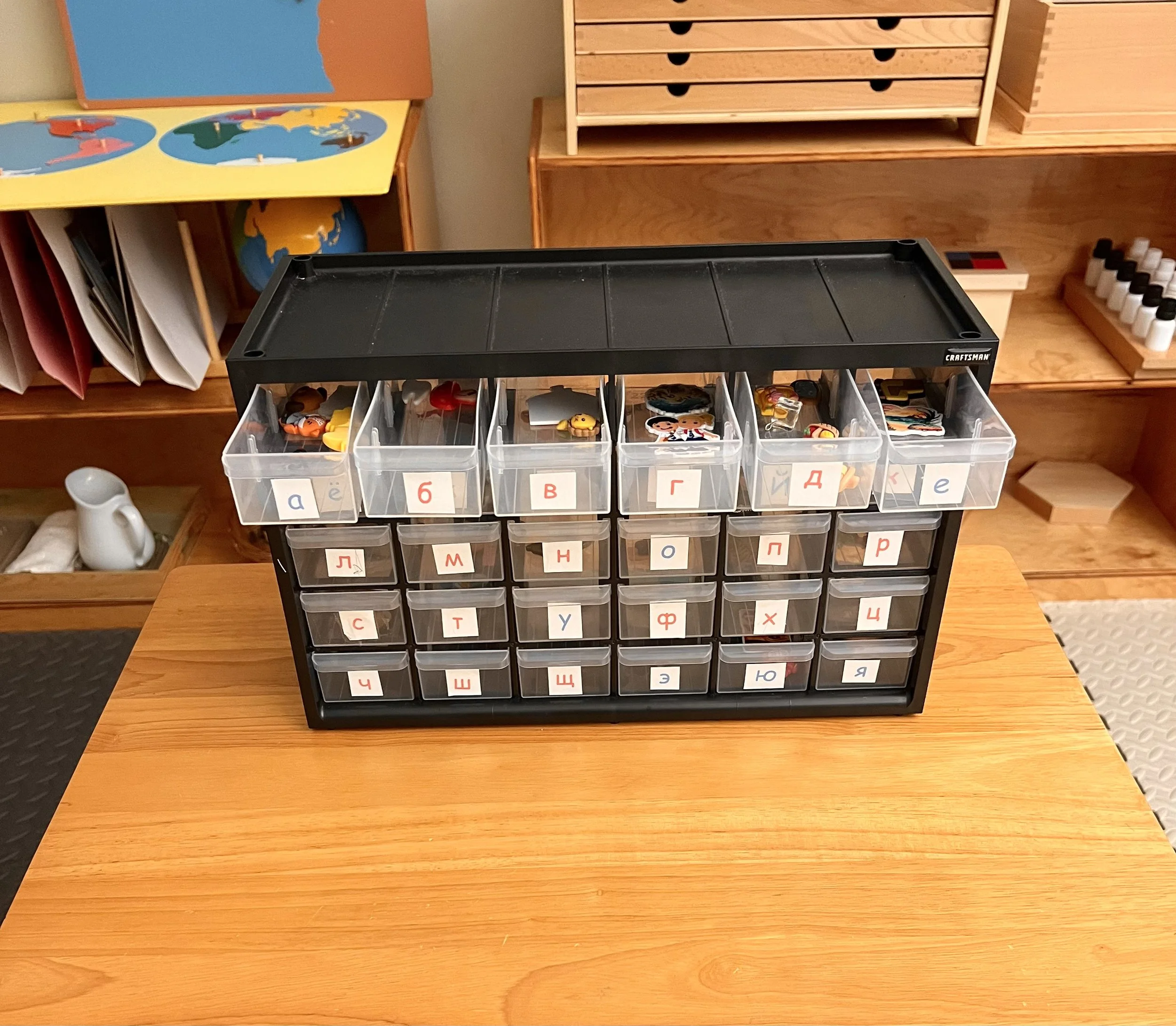
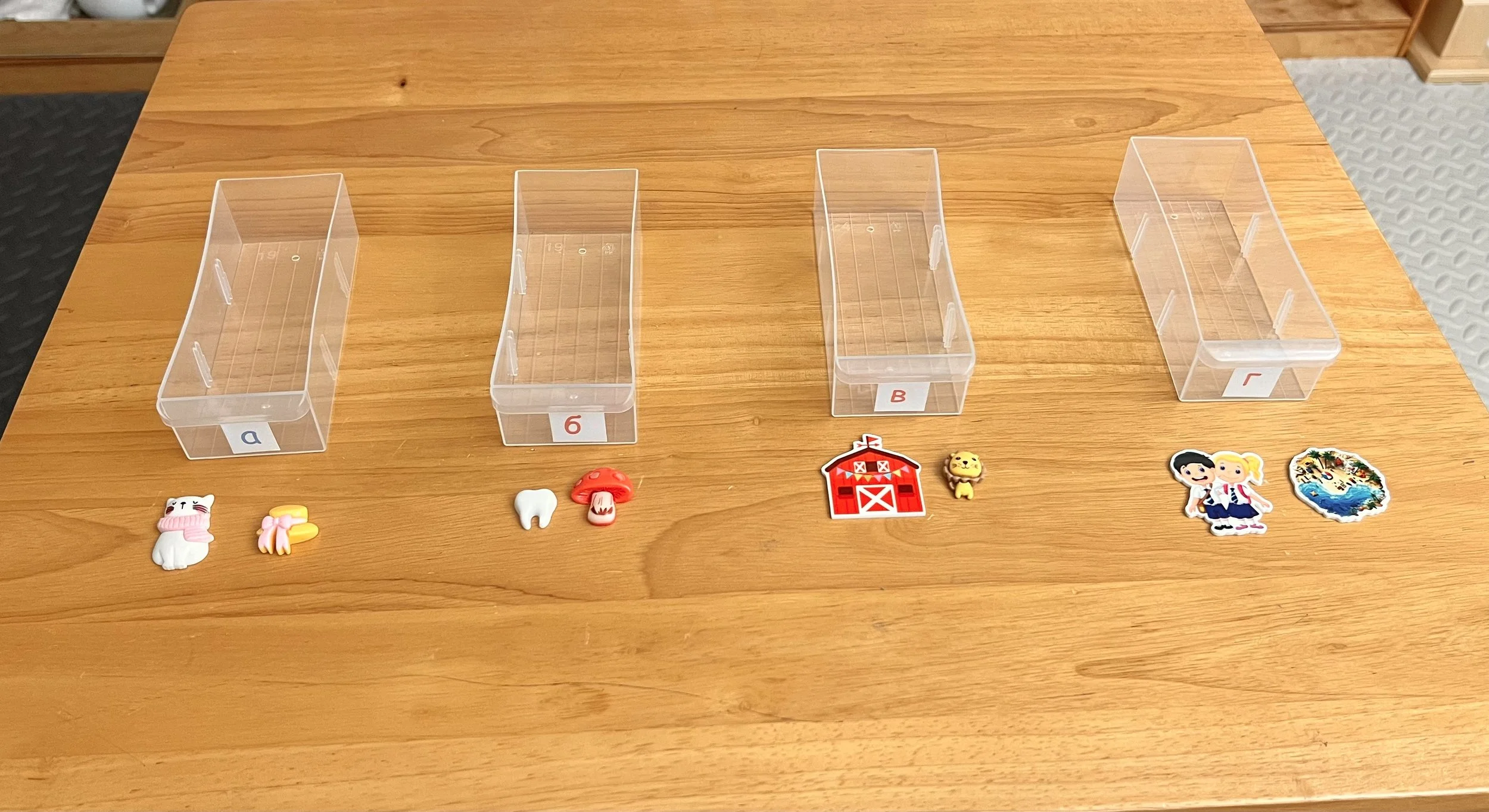
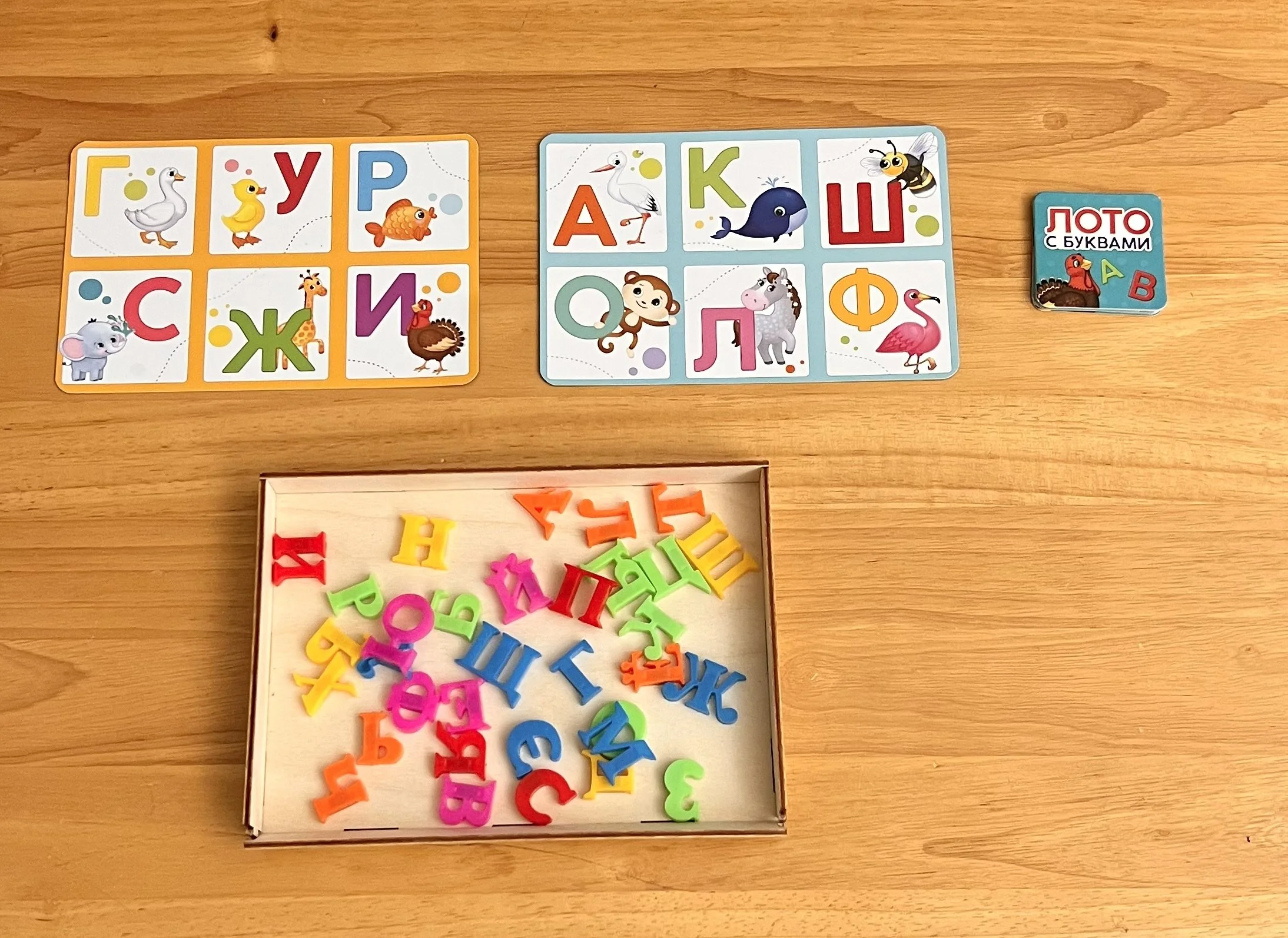
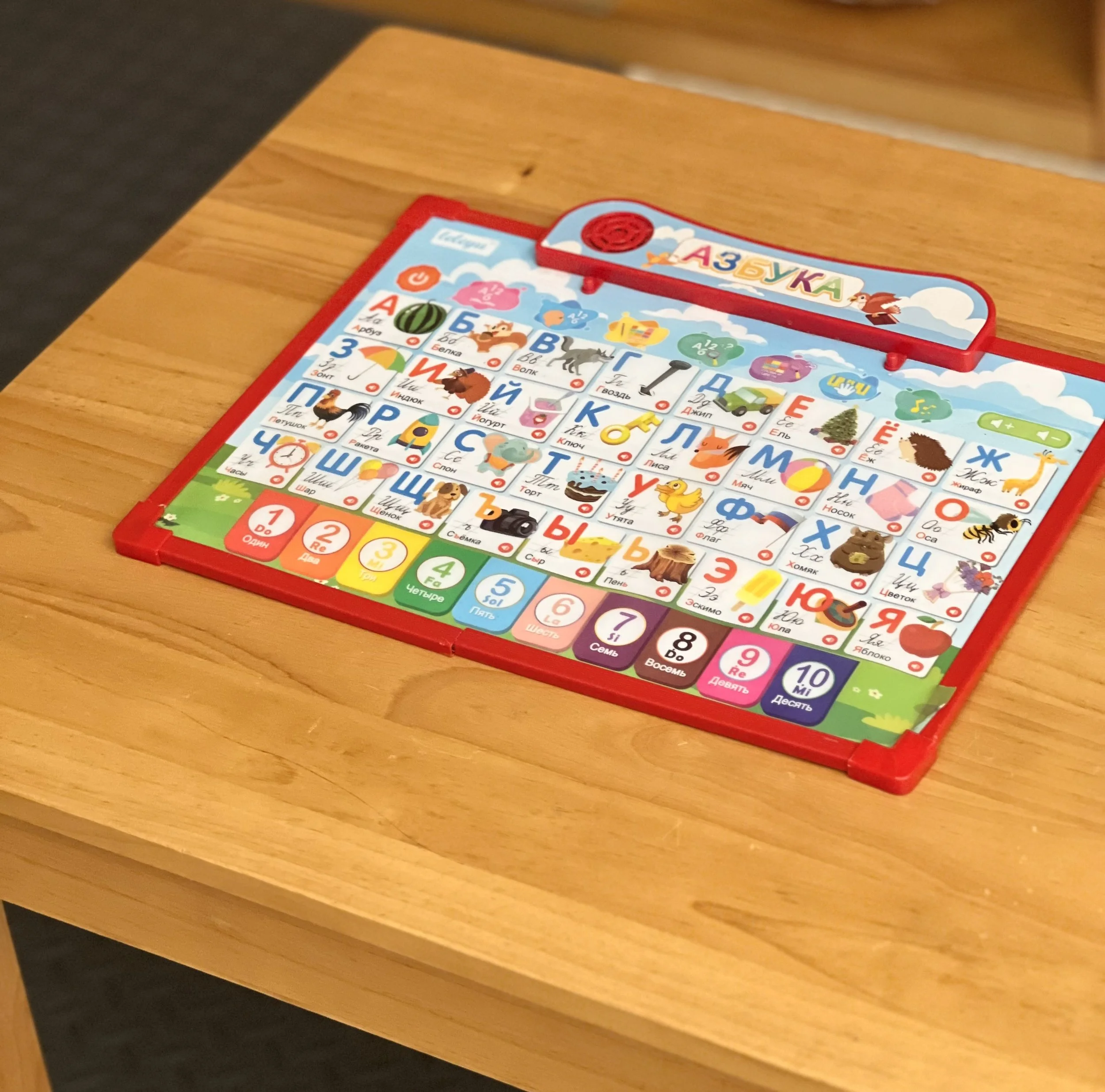
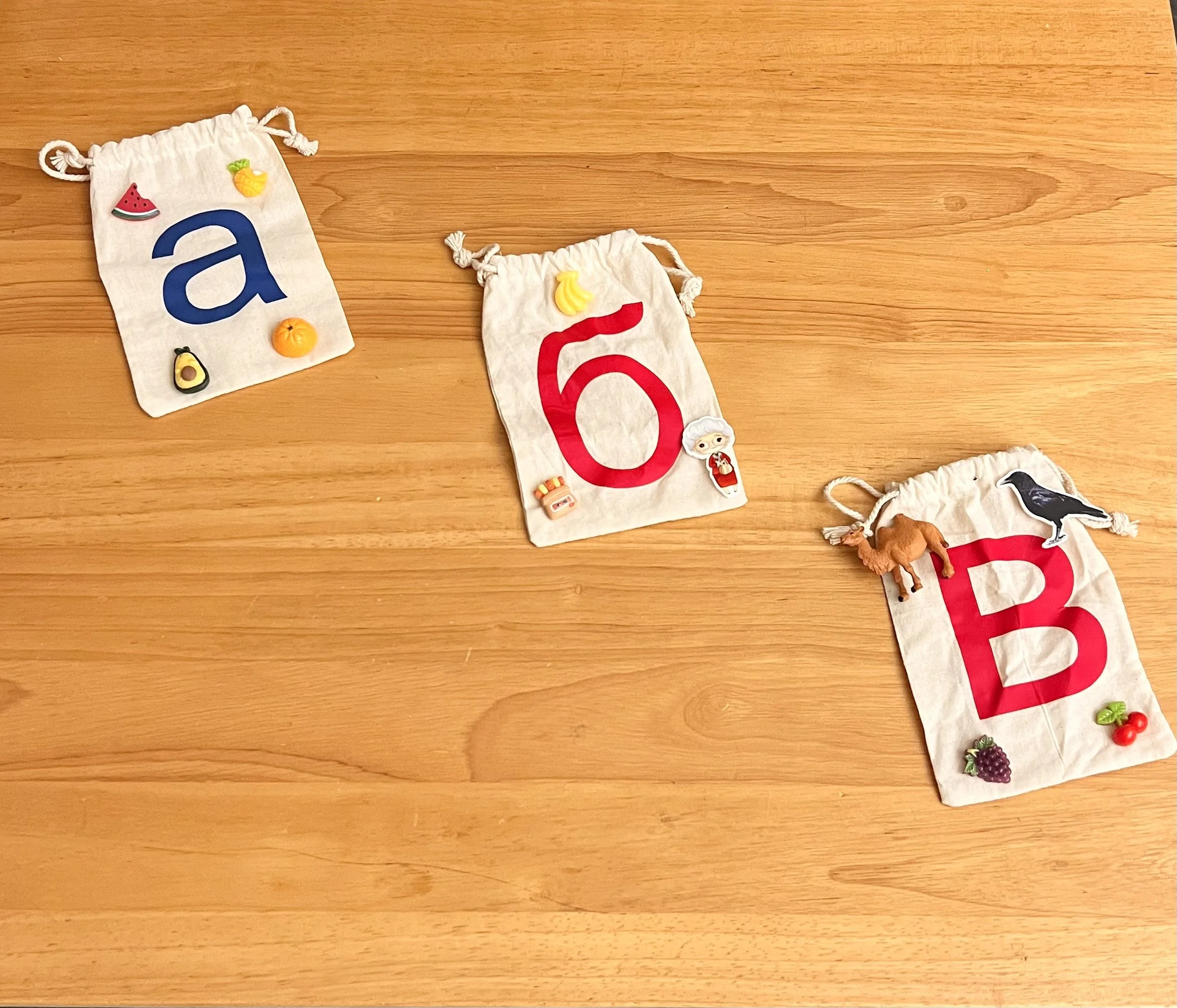
At the foundation of our Russian Immersion Program are sound pouches, a Montessori material designed to support the beginning of oral language development. Just as our Academic Enrichment Program uses sound pouches in English to help children hear and reproduce individual sounds, the Russian sound pouches introduce the distinct phonemes of the Russian language. By handling and manipulating the materials, children internalize sounds in a hands-on, multi-sensory way, building the foundation for reading, writing, and confident speech. This approach also helps children transfer their understanding of sound patterns from English to Russian, accelerating bilingual learning. Early success with these activities fosters curiosity, confidence, and enthusiasm for exploring a new language.
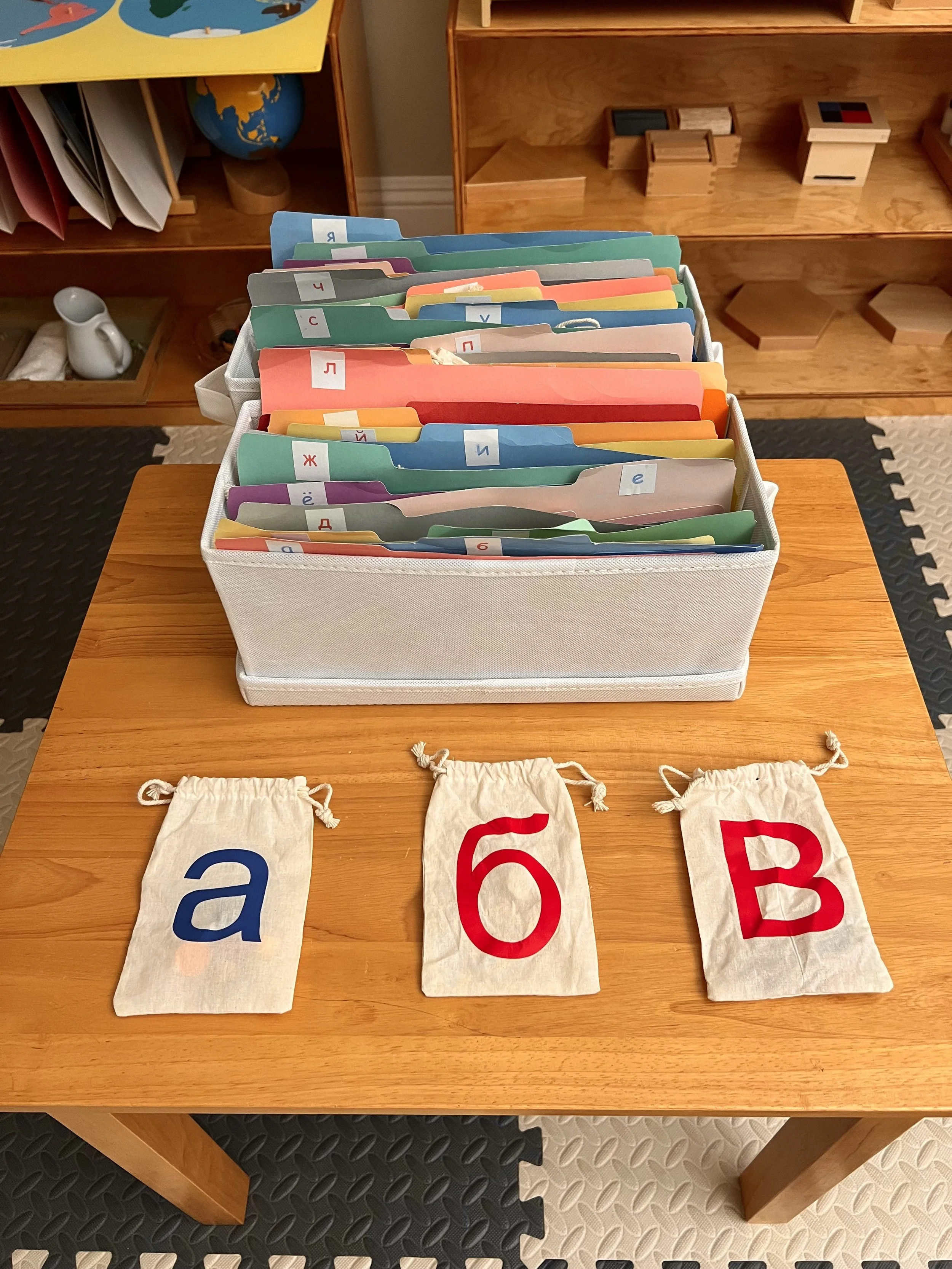
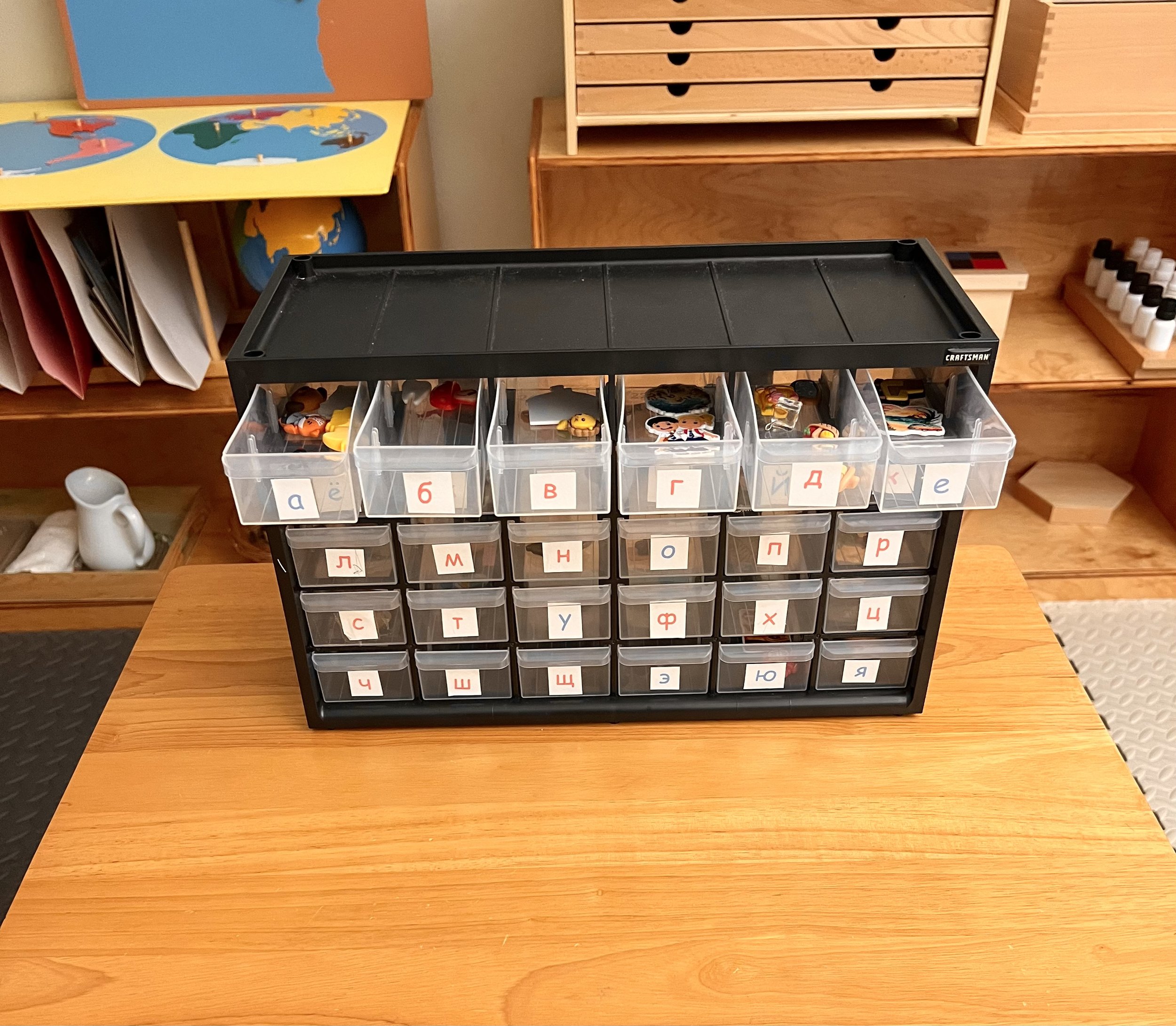
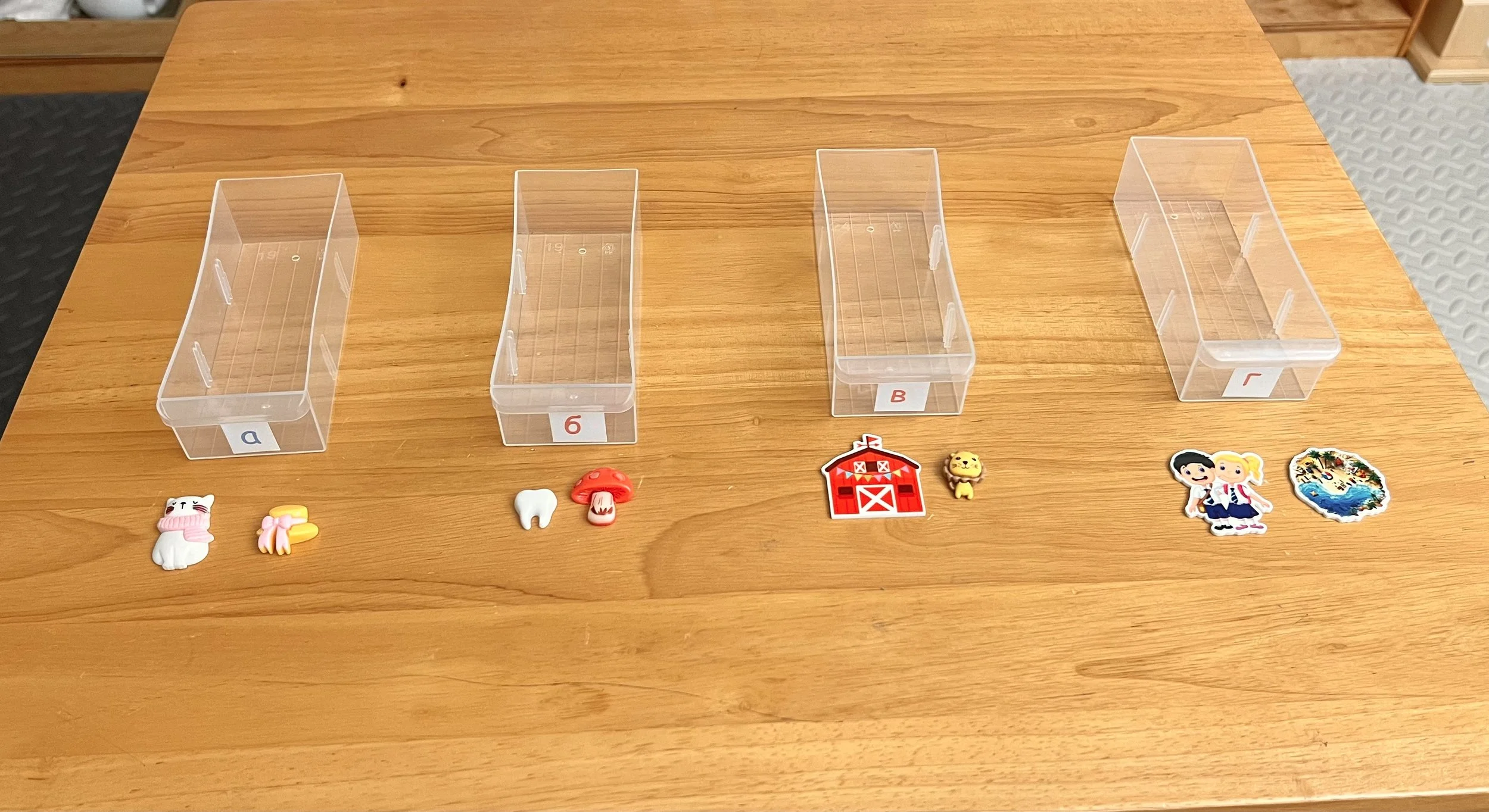
After mastering beginning sounds with the sound pouches, children move on to the sound tubs, which focus on ending sounds in Russian words. While sound pouches help build the foundation of oral language, the sound tubs strengthen phonemic awareness by encouraging children to listen carefully and identify sounds at the end of words. Using a hands-on, multi-sensory approach, children practice listening, speaking, and internalizing these sounds, which supports reading, writing, and confident speech. This progression helps children develop a deeper understanding of Russian phonetics and further builds their curiosity and enthusiasm for learning a new language.
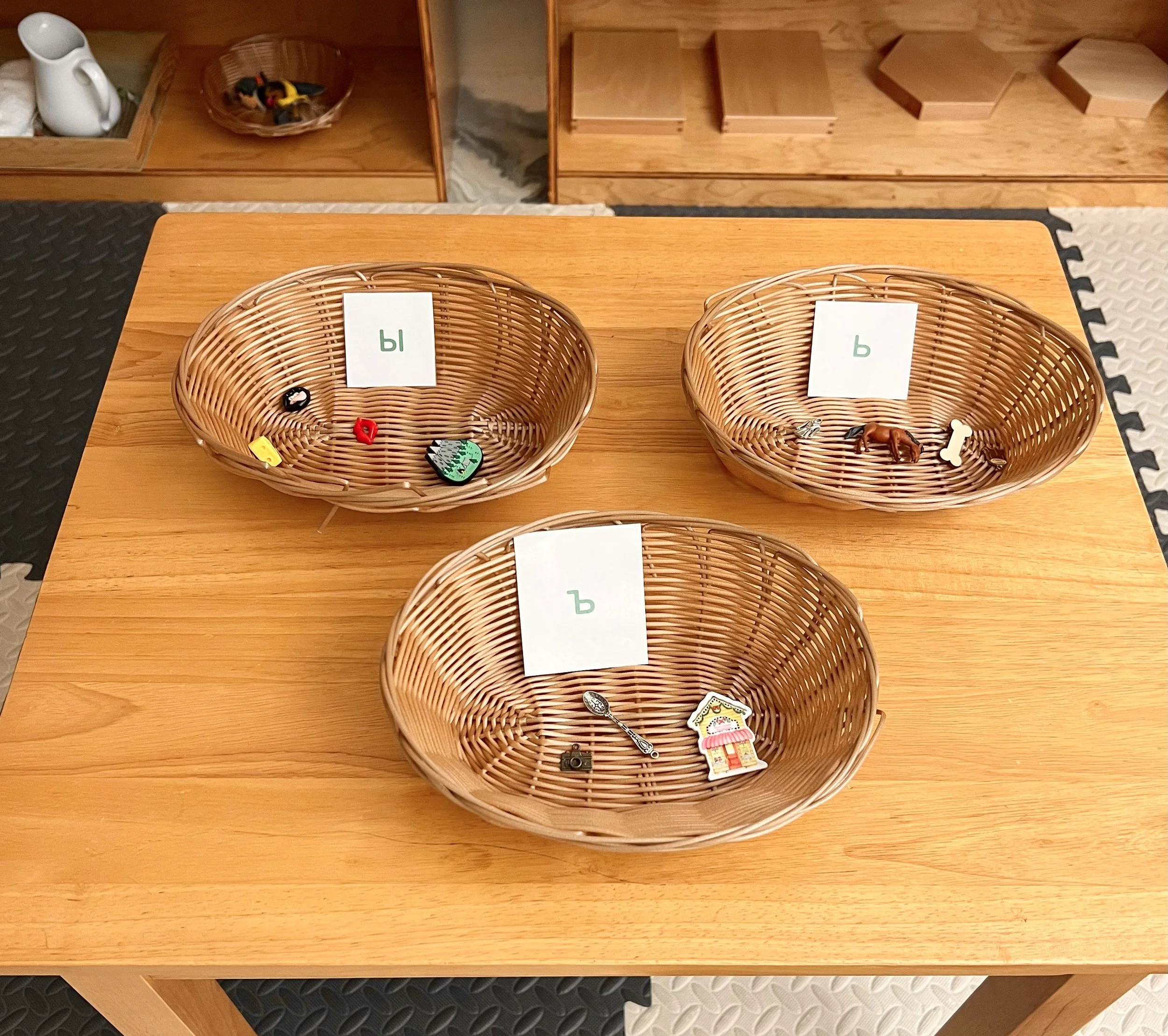
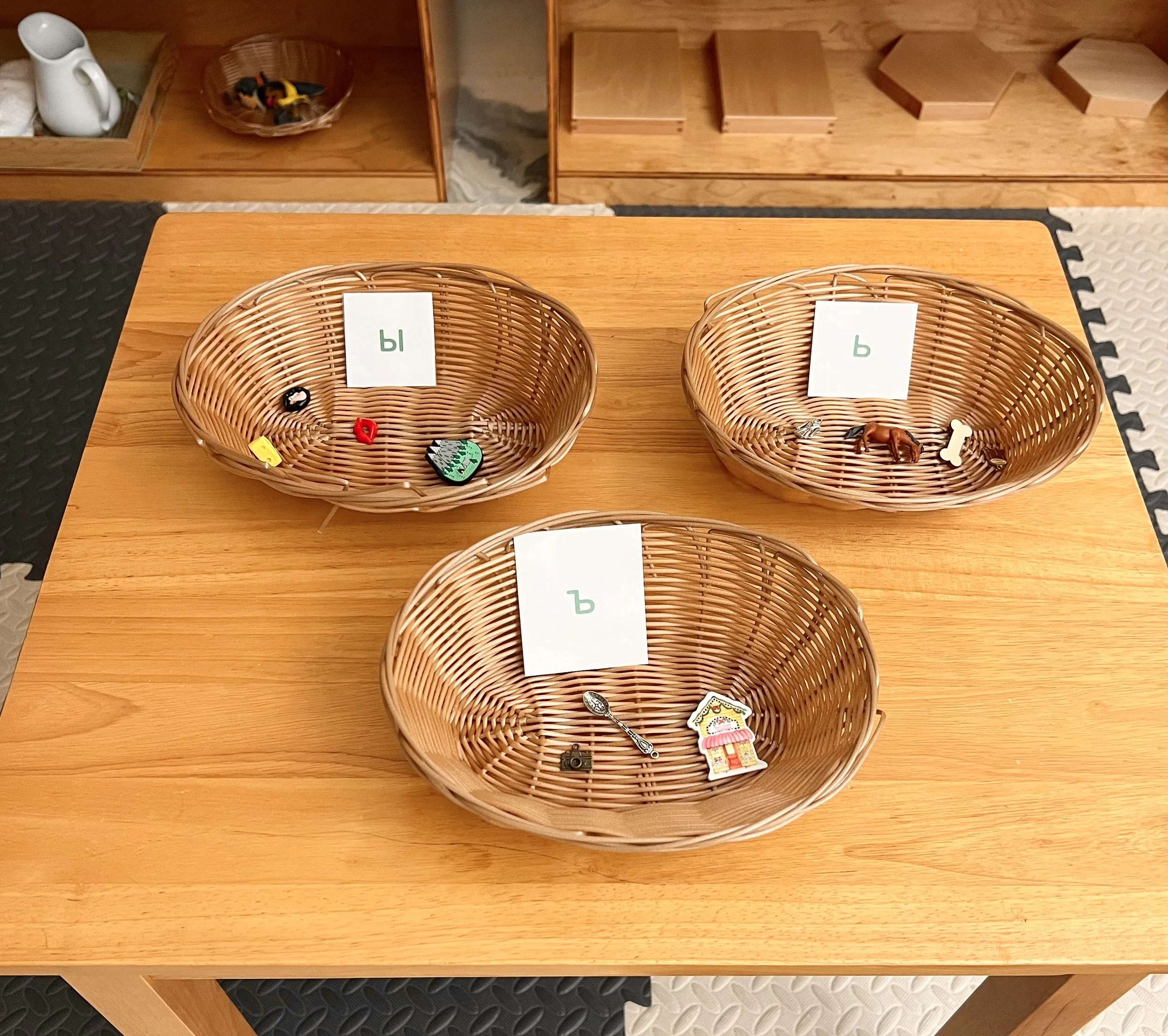
Sound baskets introduce irregular or more complex sounds in Russian, such as ь (soft symbol), ъ (hard symbol), and ы (ih). Each sound is presented individually, allowing children to focus on mastering these unique phonemes at their own pace. Building on the foundation of beginning and ending sounds from the sound pouches and sound tubs, the baskets provide a hands-on, multi-sensory way to develop advanced phonemic awareness. This careful practice supports accurate pronunciation, reading, and confident oral expression, further nurturing curiosity and enjoyment in learning Russian.
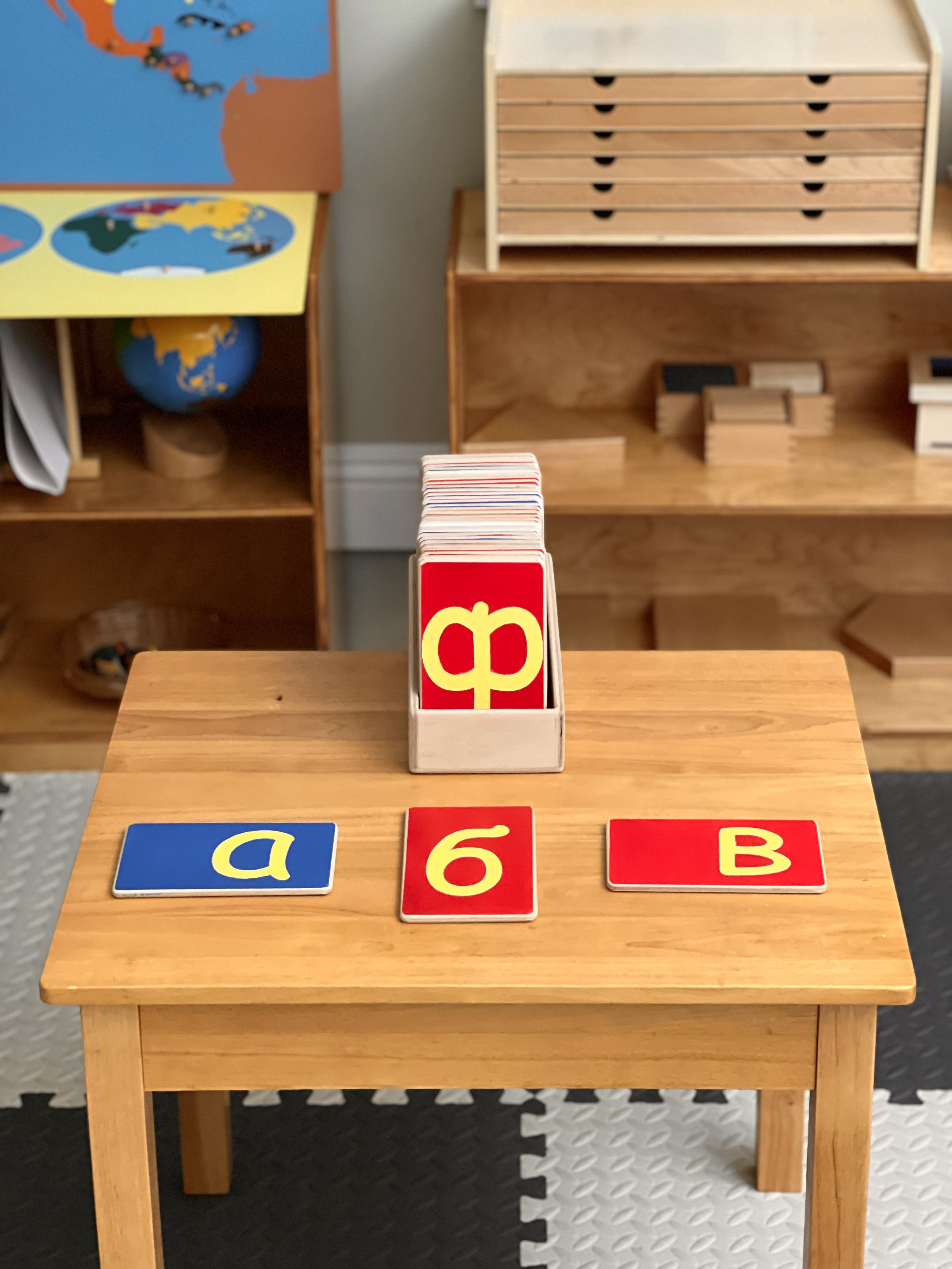
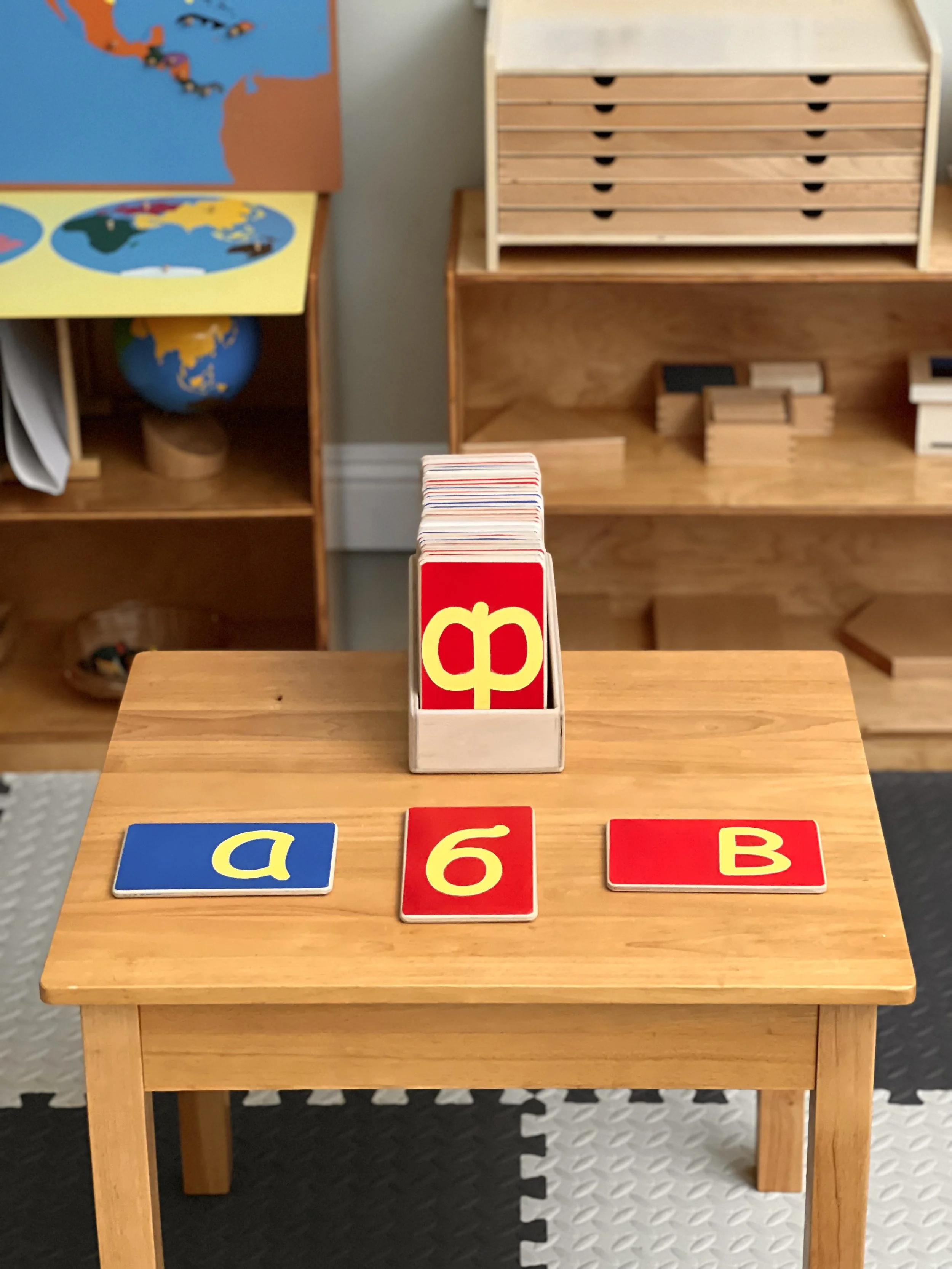
Sandpaper letters are a key Montessori material used to help children connect spoken Russian sounds with their written forms through touch and movement. Children trace each textured letter while saying its sound, reinforcing oral language and building strong muscle memory for writing. This work naturally builds on the sound pouches, sound tubs, and sound baskets, where children first explore and isolate Russian sounds through listening and speech. By moving from sound exploration to tactile letter work, children develop a solid foundation for reading and writing in Russian. This multisensory approach makes language learning engaging, concrete, and developmentally appropriate.
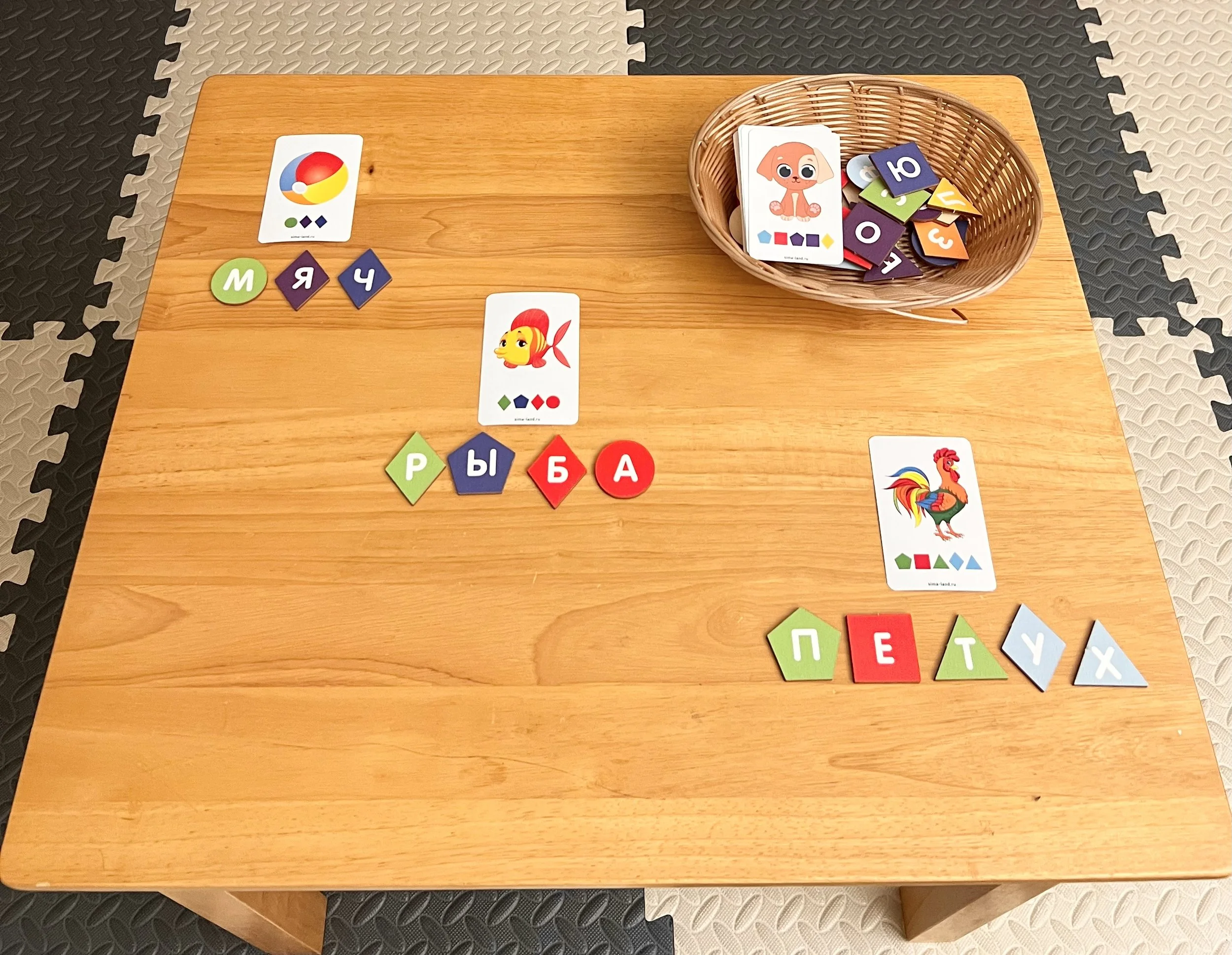
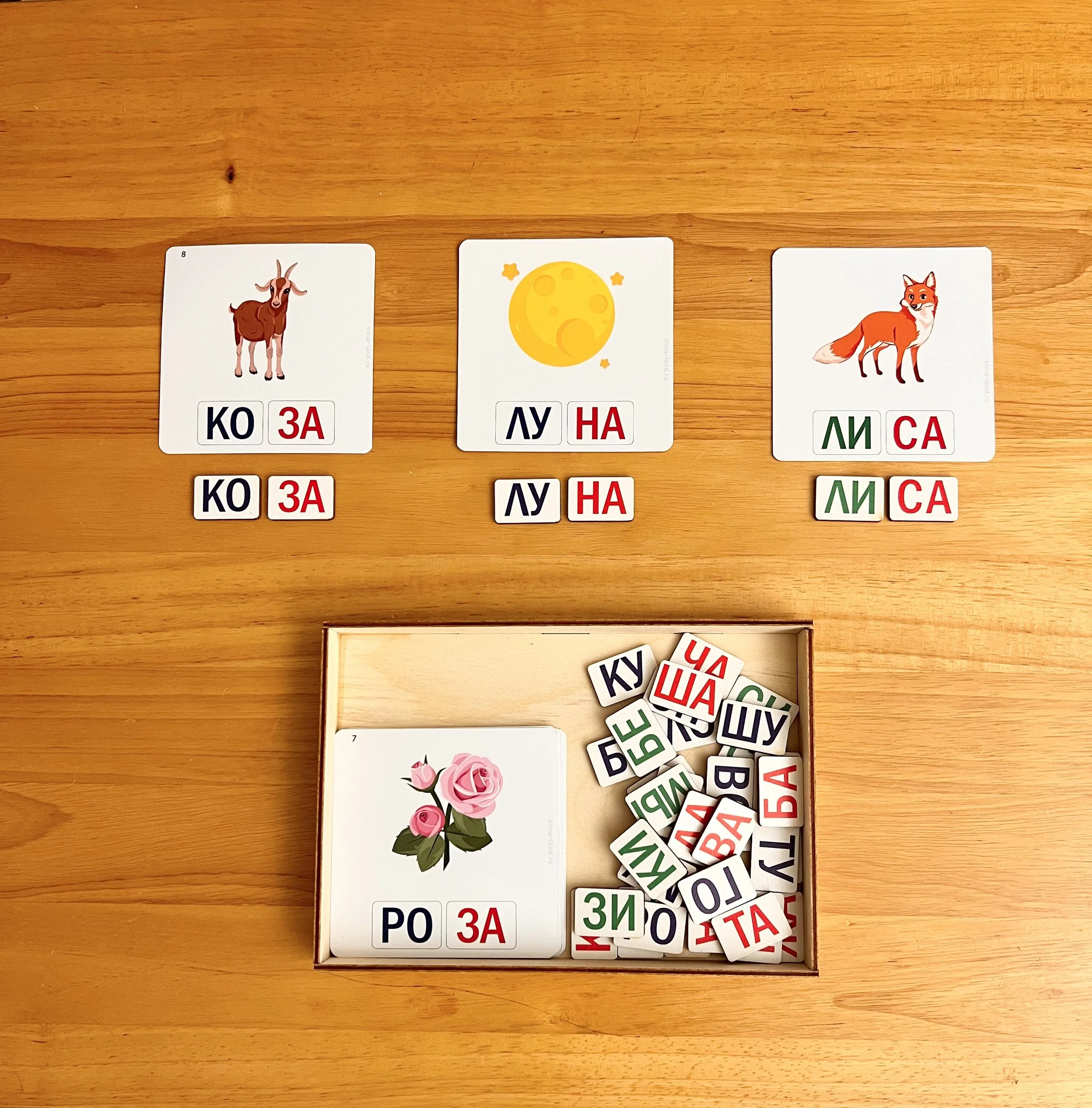
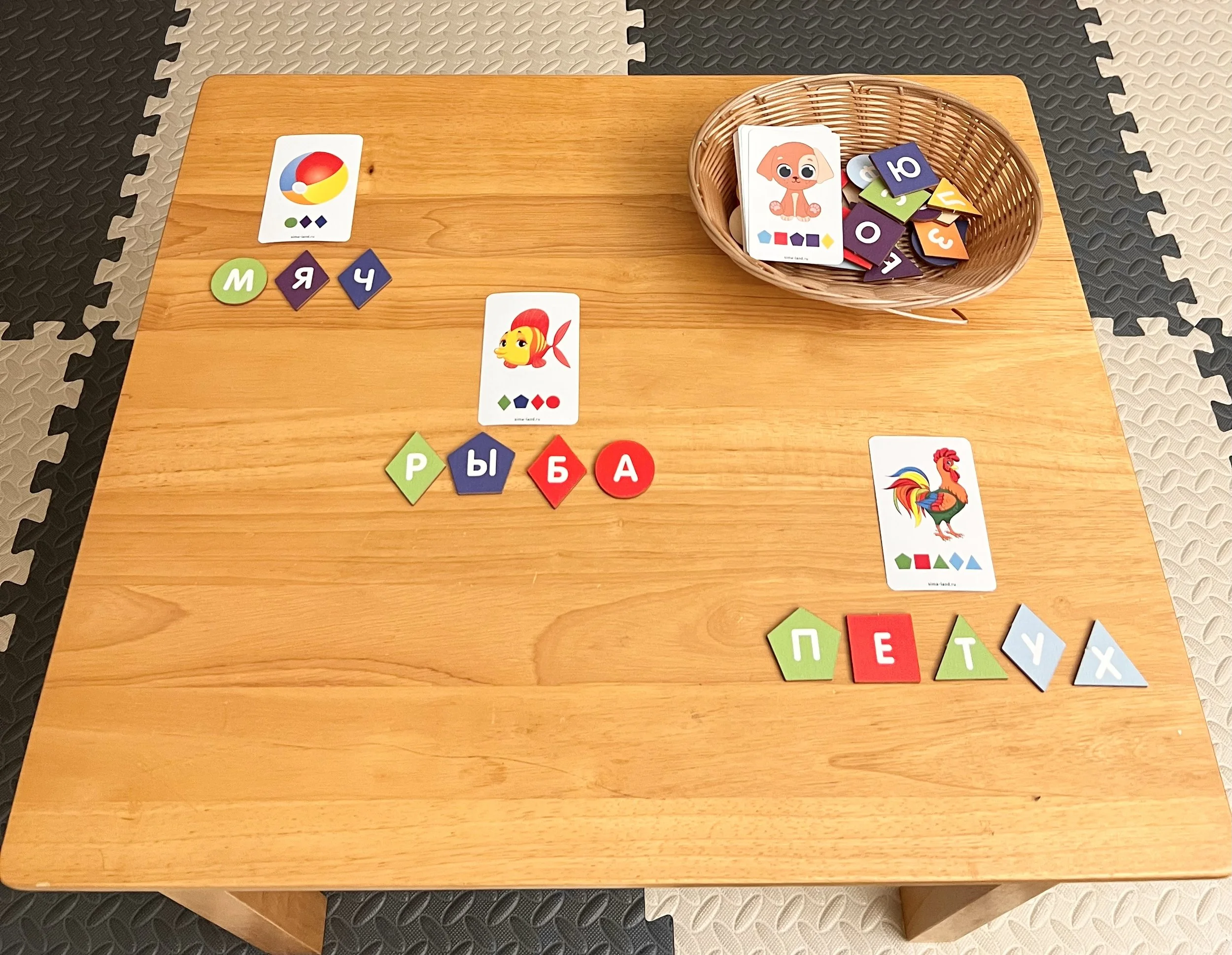
Following the tactile work of sandpaper letters, children move into Symbolic Word Construction, where they begin building and reading words in a concrete yet abstract way. Using picture cards paired with unique shapes that represent individual letters, the child carefully selects and arranges the corresponding shapes in the correct sequence. This process strengthens left-to-right order, sound blending, and early spelling skills without relying solely on written letters. Once the word is built, the child reads it aloud, reinforcing the connection between sounds, symbols, and meaning. This activity bridges hands-on phonetic awareness with confident early reading and word formation.
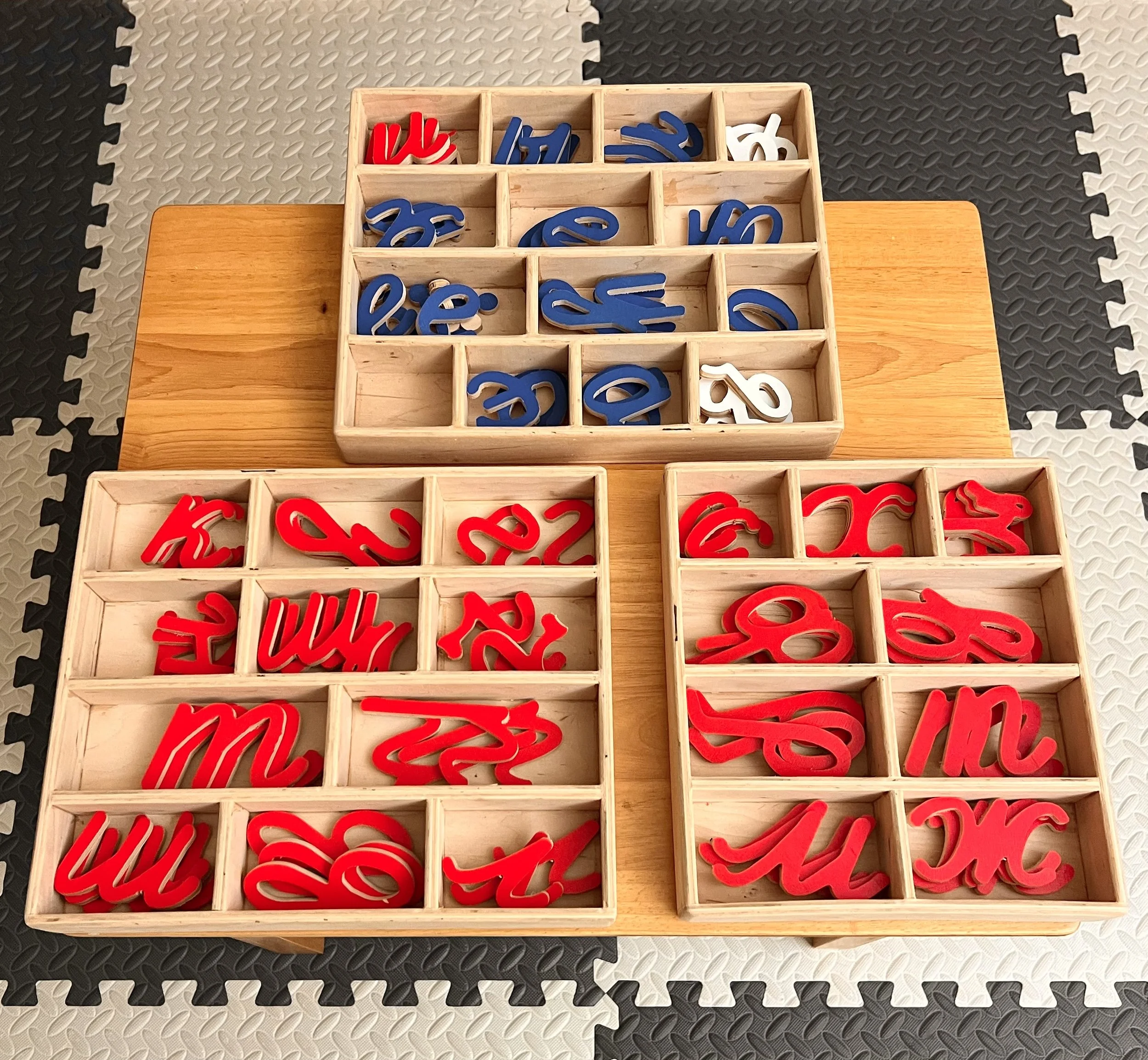
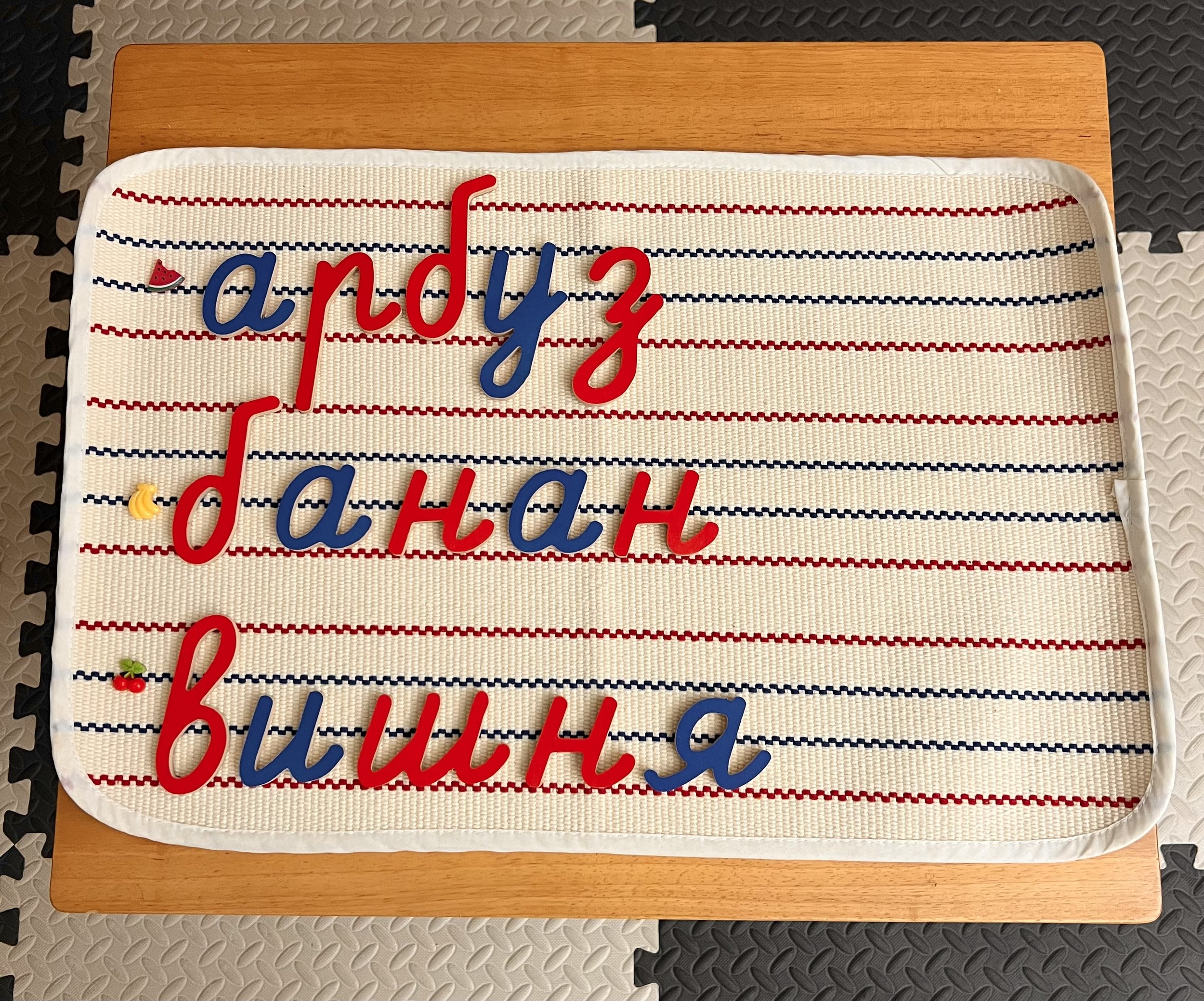
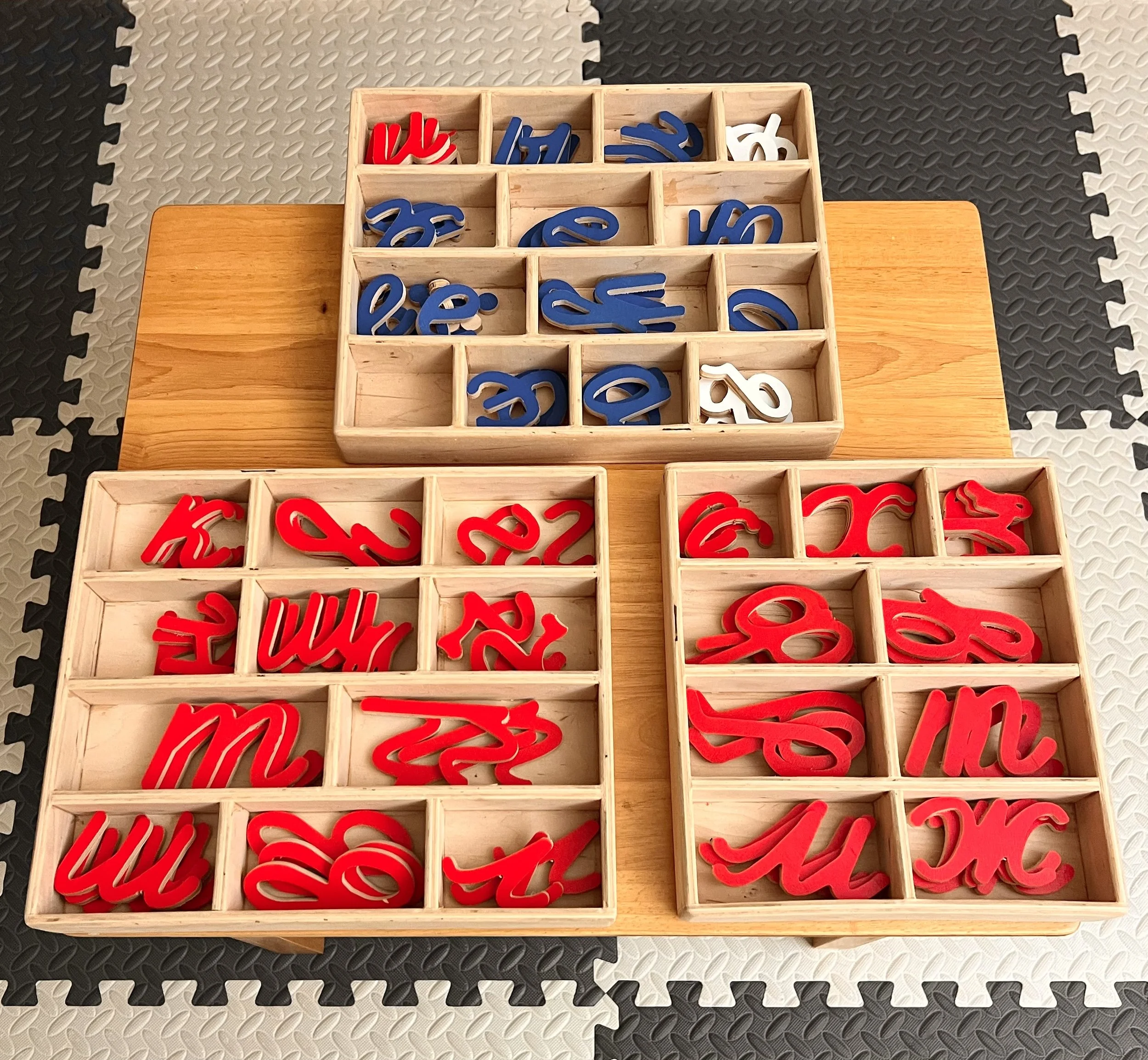
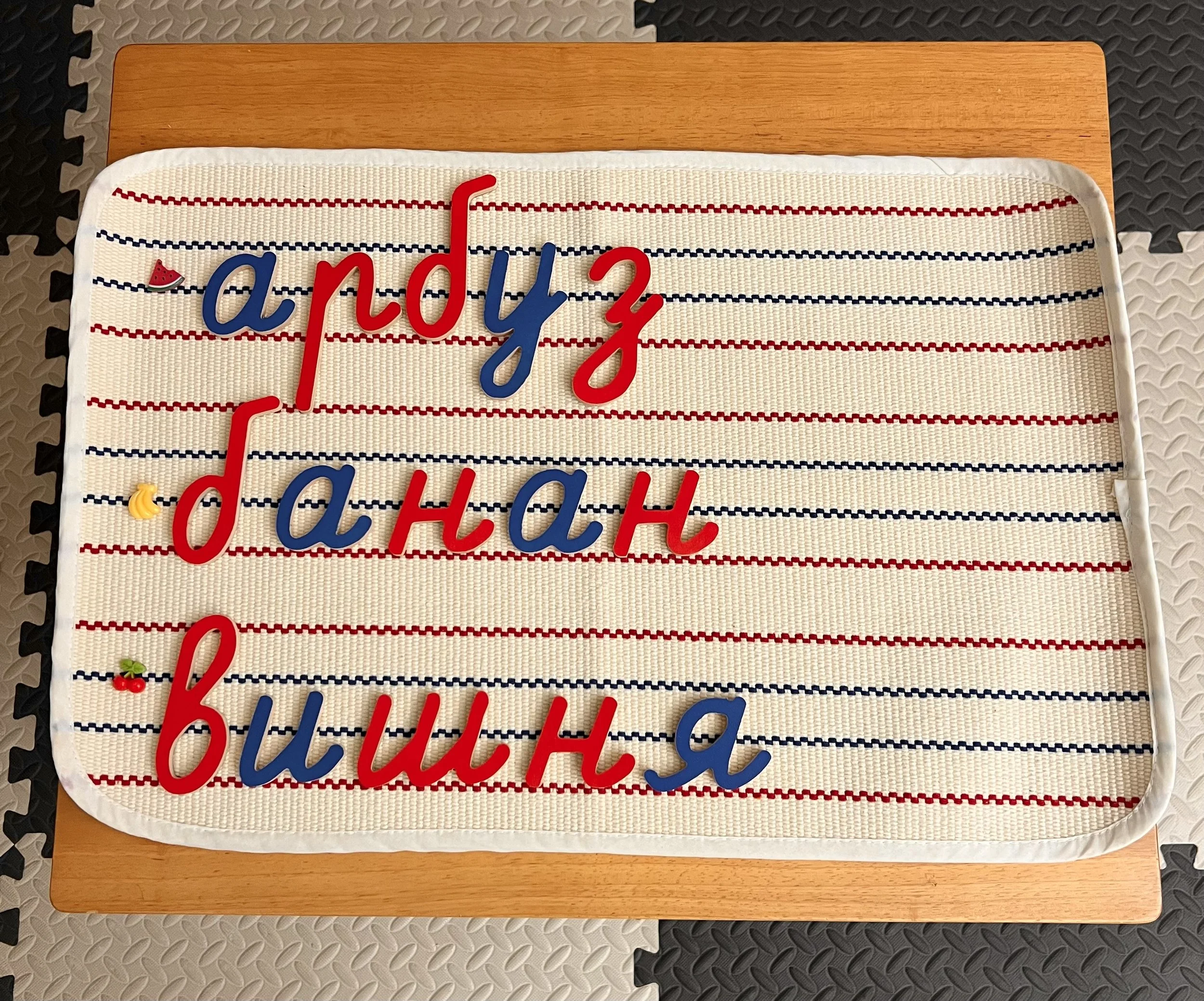
After children gain confidence building words using written letters on shapes, they transition to the Movable Alphabet, where those same written symbols are now explored in a more traditional letter form. Using a large, movable alphabet, children construct individual words by matching sounds to letters, often working with miniature objects from the sound pouches, sound tubs, and sound baskets for concrete reference. This allows children to focus on phonemic awareness and spelling without the added challenge of handwriting. By physically manipulating letters and connecting them to real objects, children deepen their understanding of sound–symbol relationships.
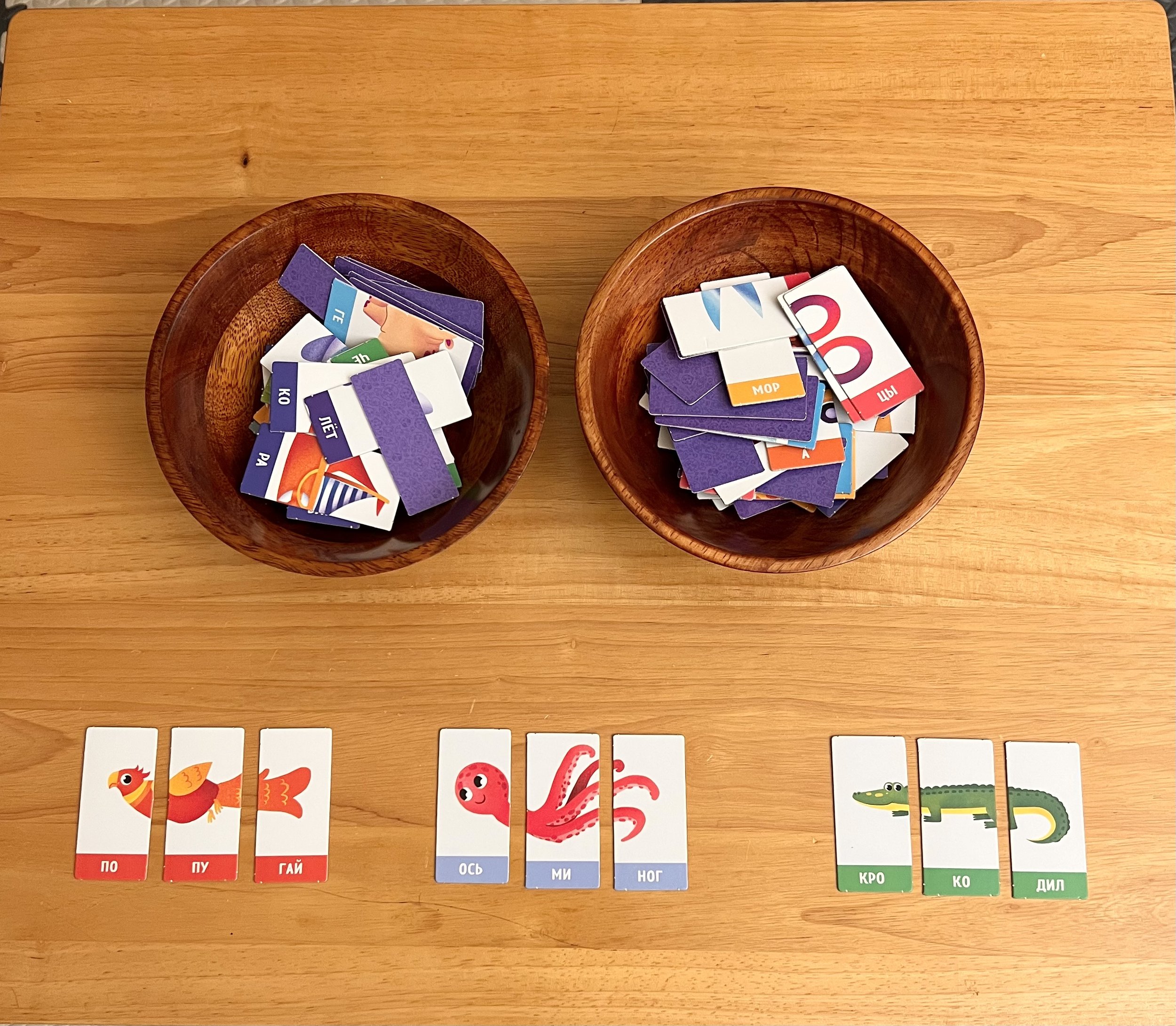
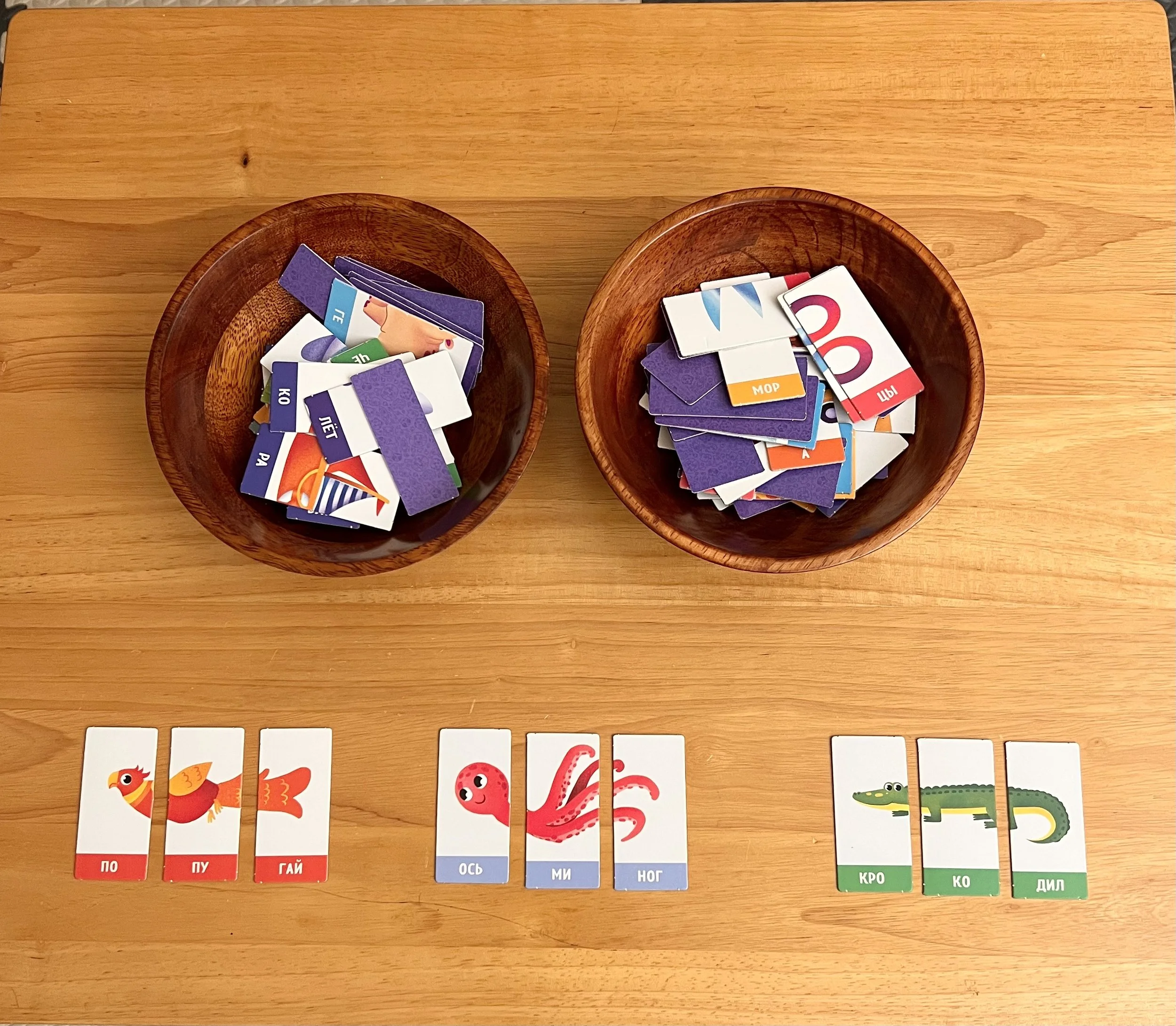
Building on children’s experience with symbolic word construction and the movable alphabet, Syllabic Word Assembly and Reading introduces children to blending larger language units with confidence. In this activity, words are divided into individual syllables presented on puzzle-style cards, which children carefully assemble in the correct order to form complete words. This work strengthens decoding, sequencing, and reading fluency while reinforcing natural speech patterns in Russian. By moving from single-sound letter work to syllable-based reading, children gain a deeper understanding of word structure and develop smoother, more confident reading skills.
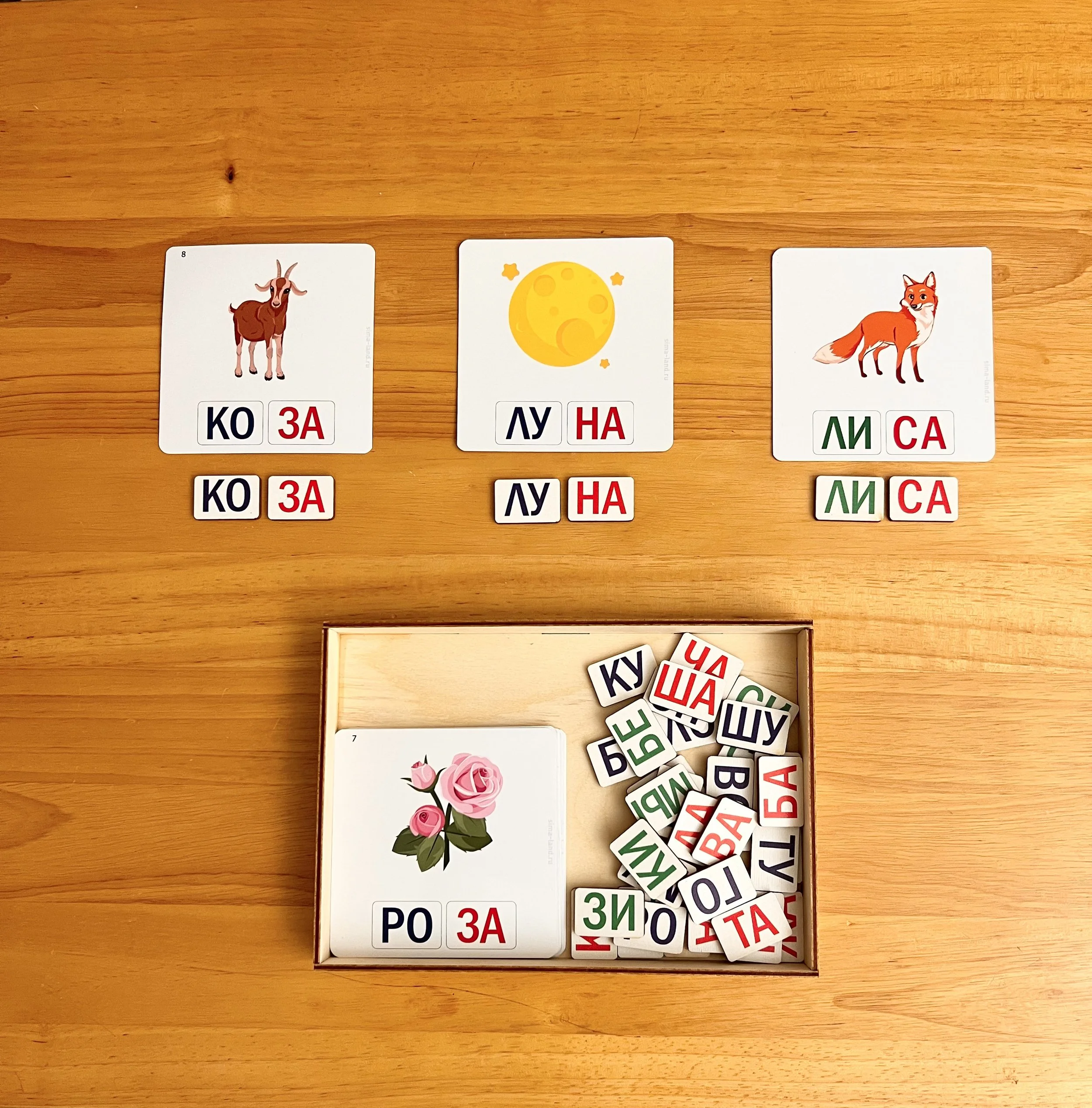
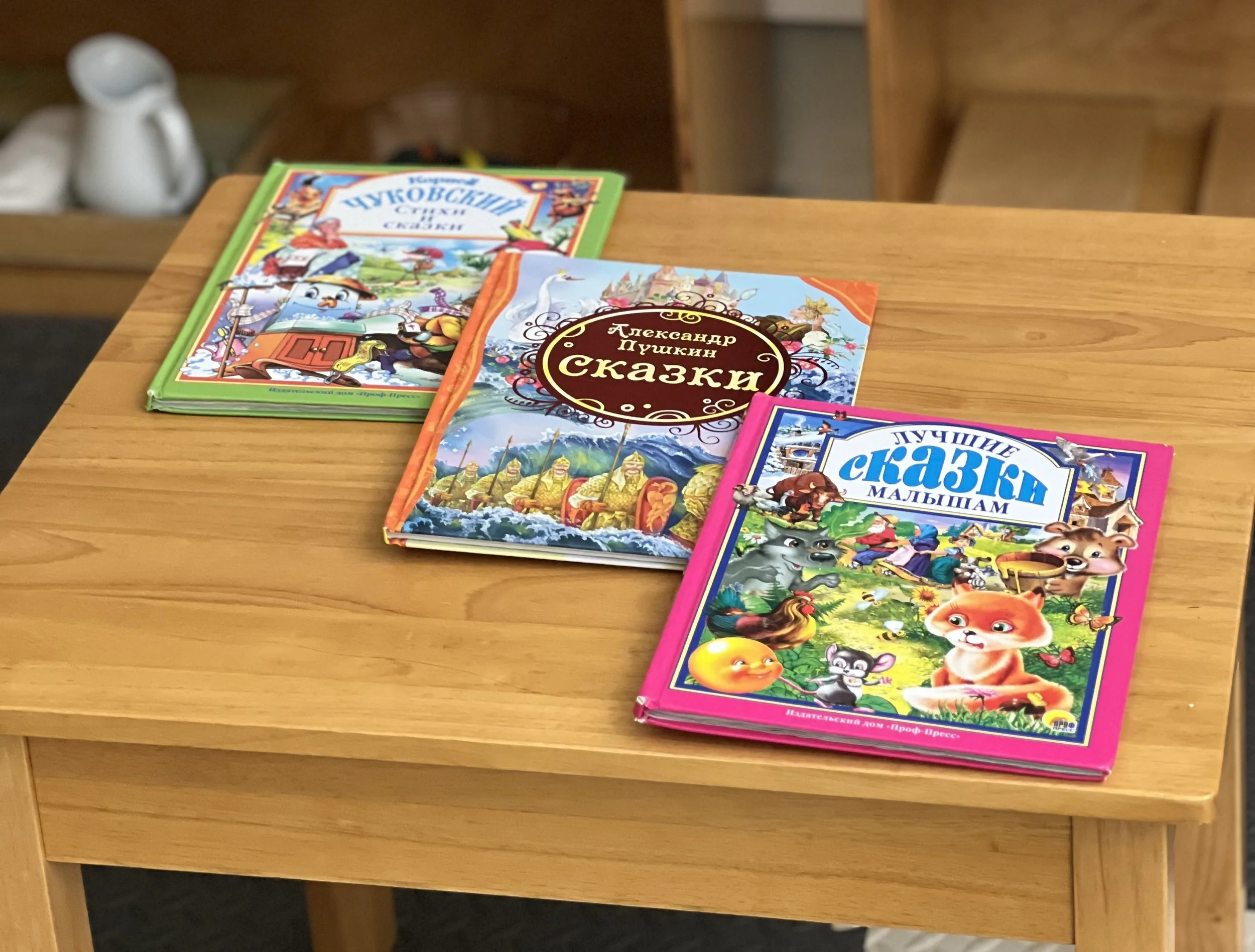
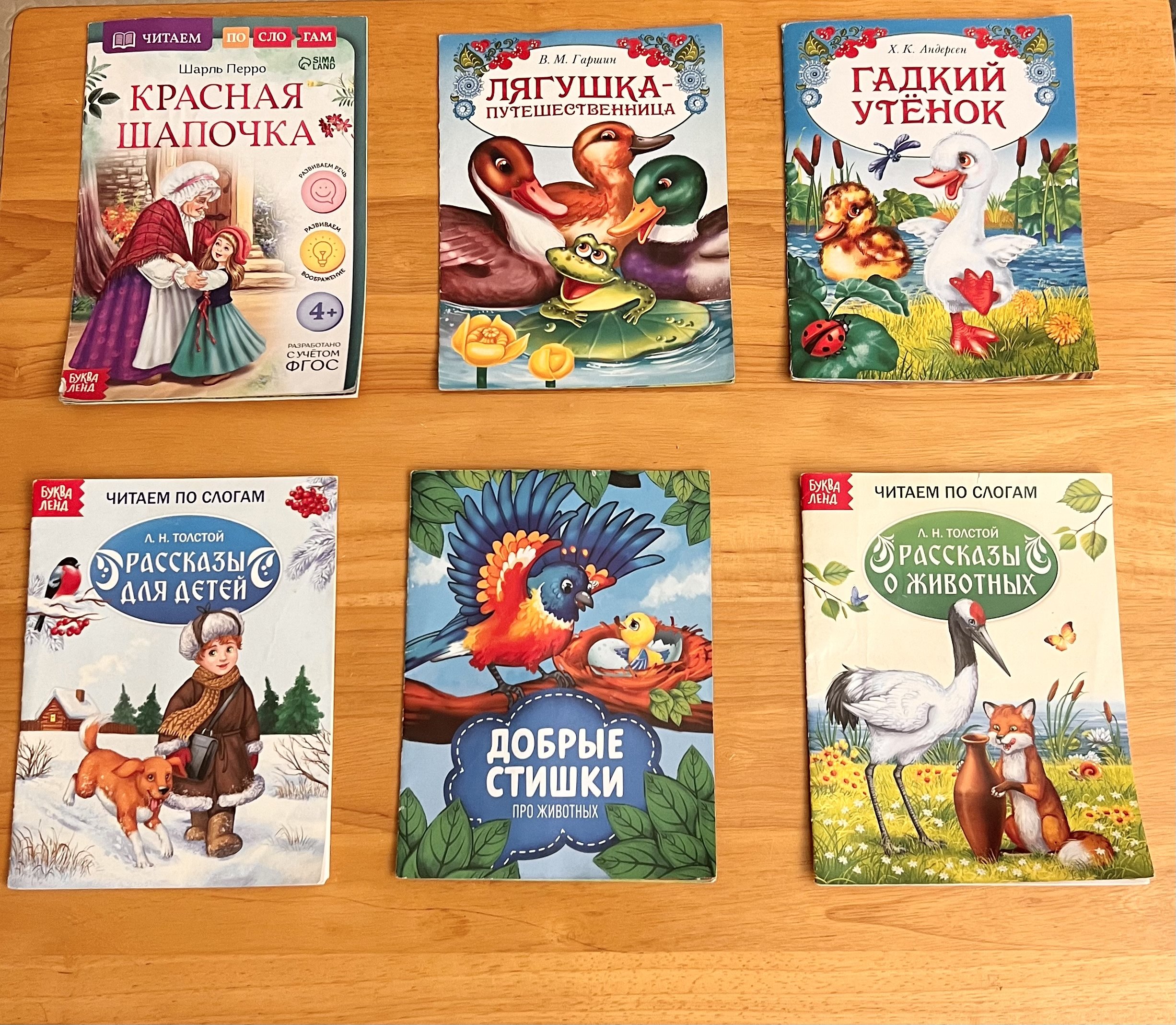
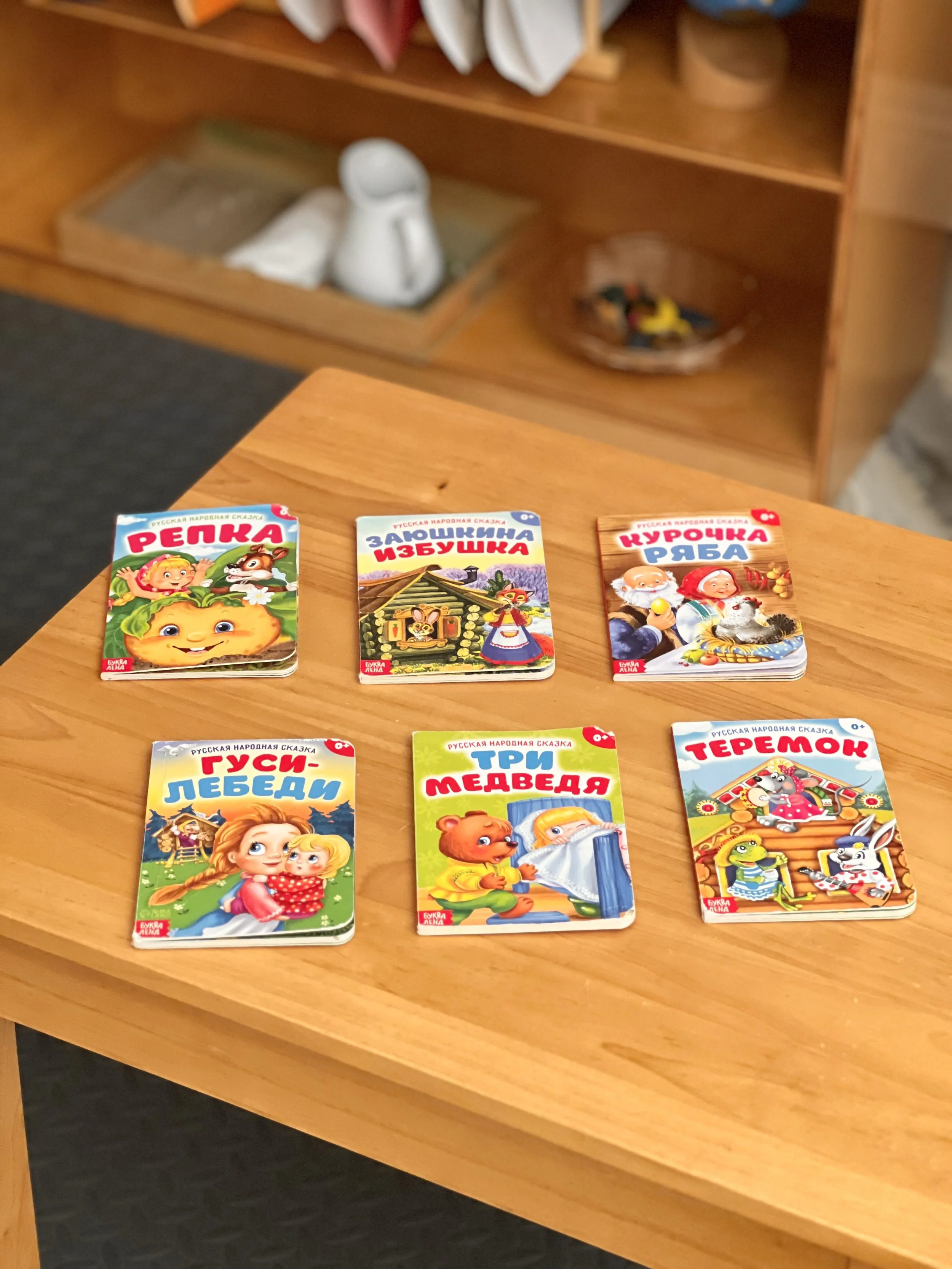
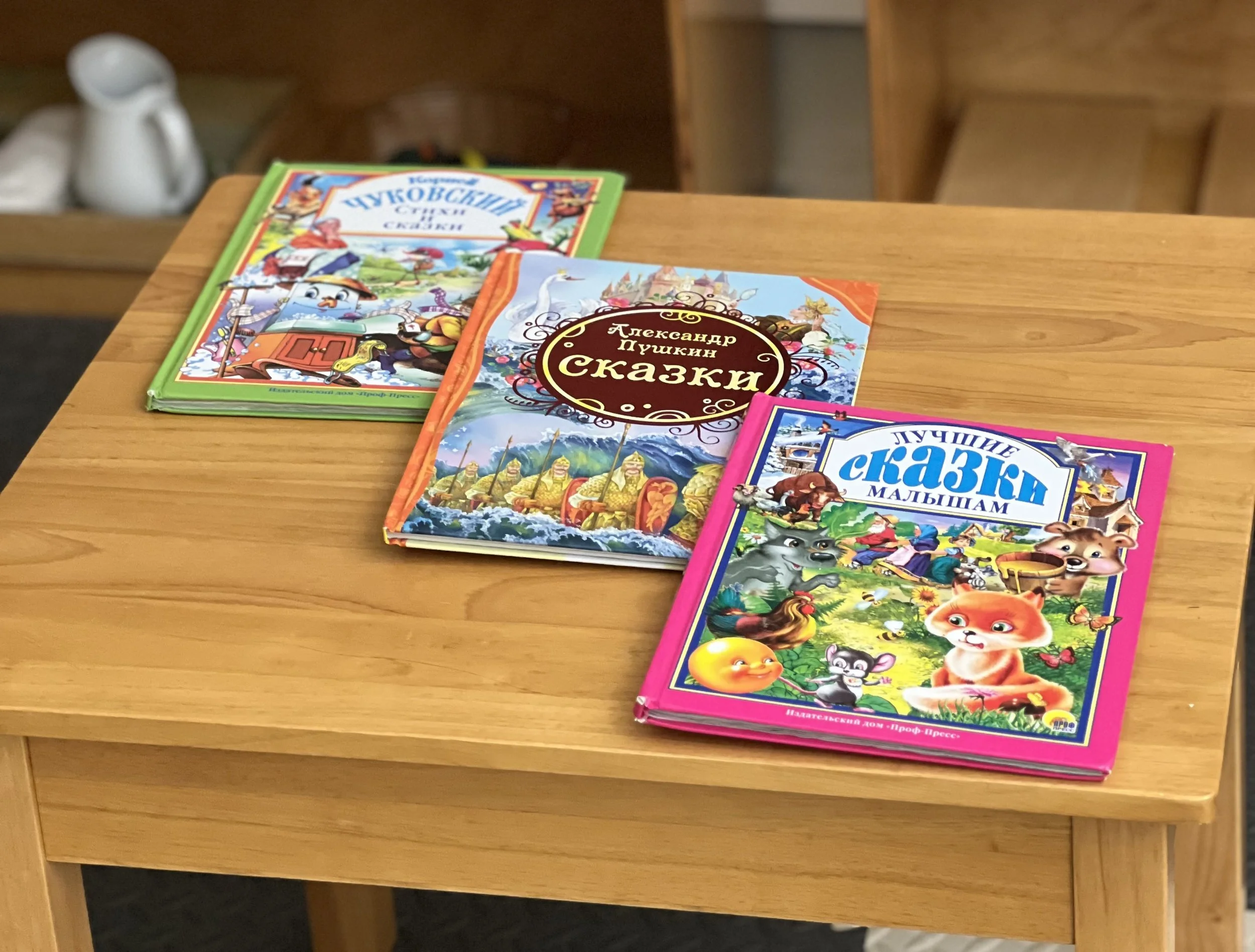
Building on the skills developed through symbolic word construction, the movable alphabet, and syllabic word assembly, children move into Integrated Literacy and Story Exploration, where language comes alive through narrative. In this stage, children engage with storybooks in two ways: some are read aloud to them to cultivate listening skills, comprehension, and a love of language, while others are used for guided reading practice, allowing children to apply their decoding and syllable-blending skills in meaningful contexts. This activity reinforces the connections between letters, syllables, and words while nurturing fluency, confidence, and a sense of storytelling. Reading in Russian becomes not just a skill to master, but a source of enjoyment and discovery, preparing children for more complex texts and independent reading.
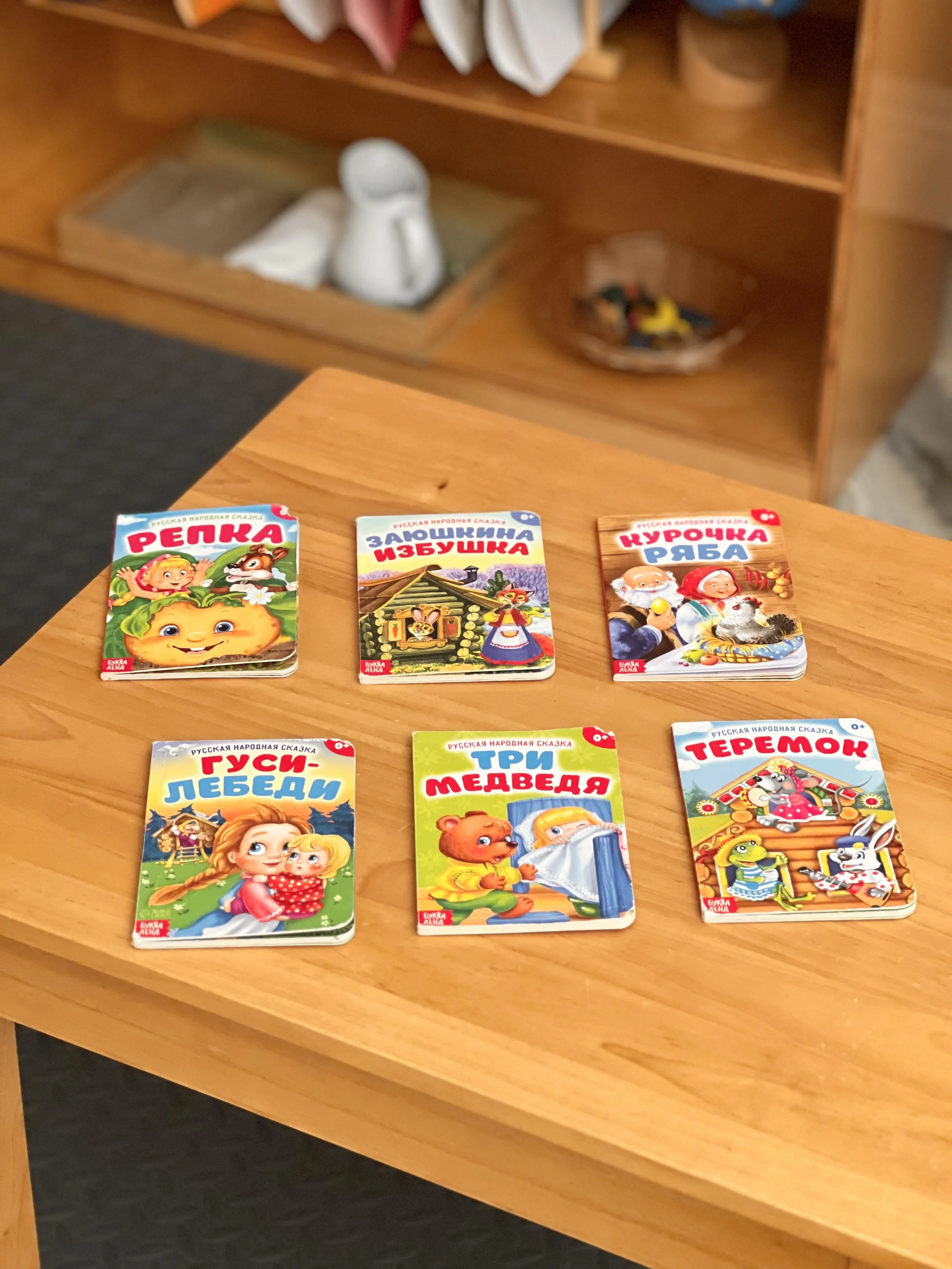
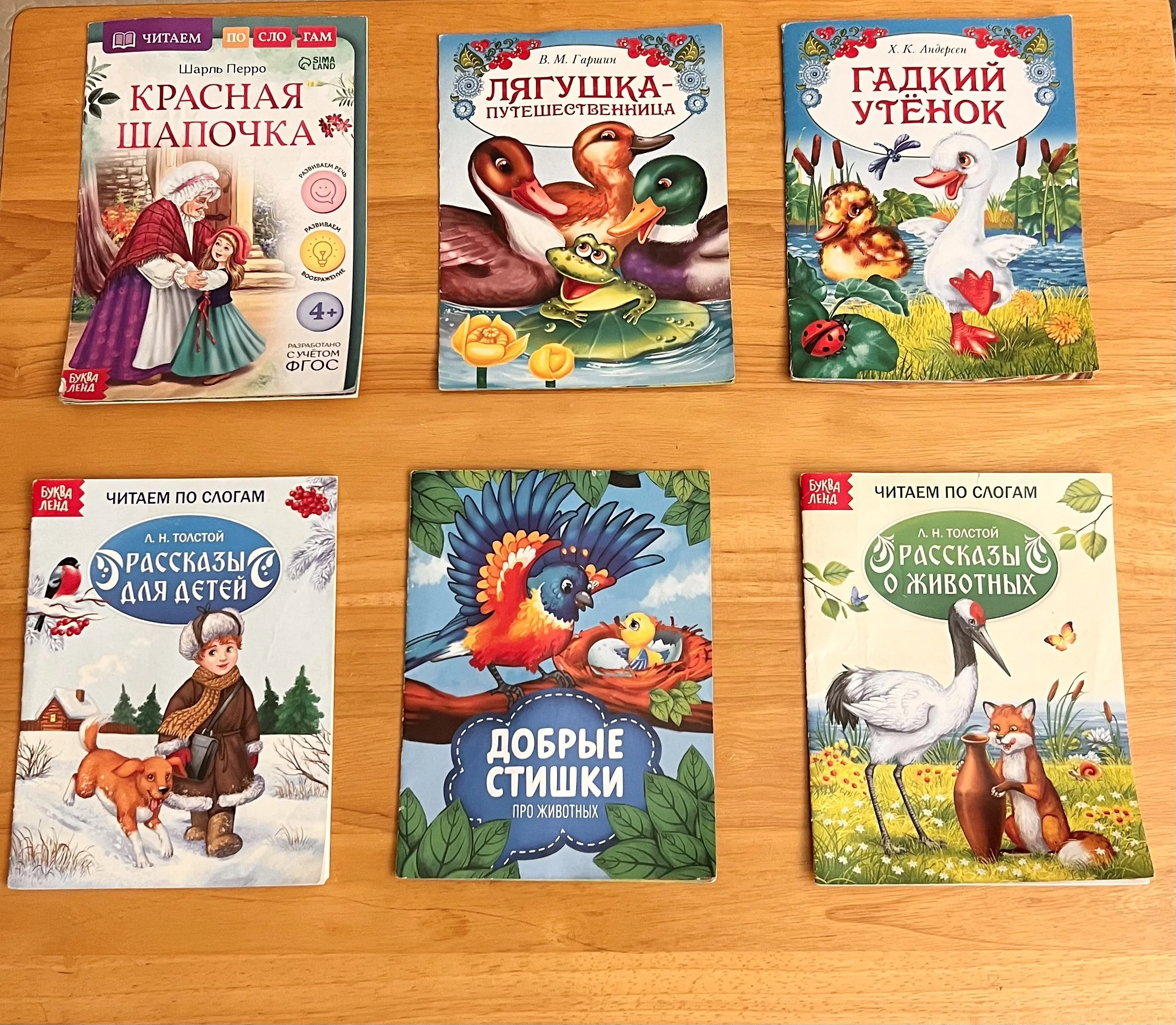
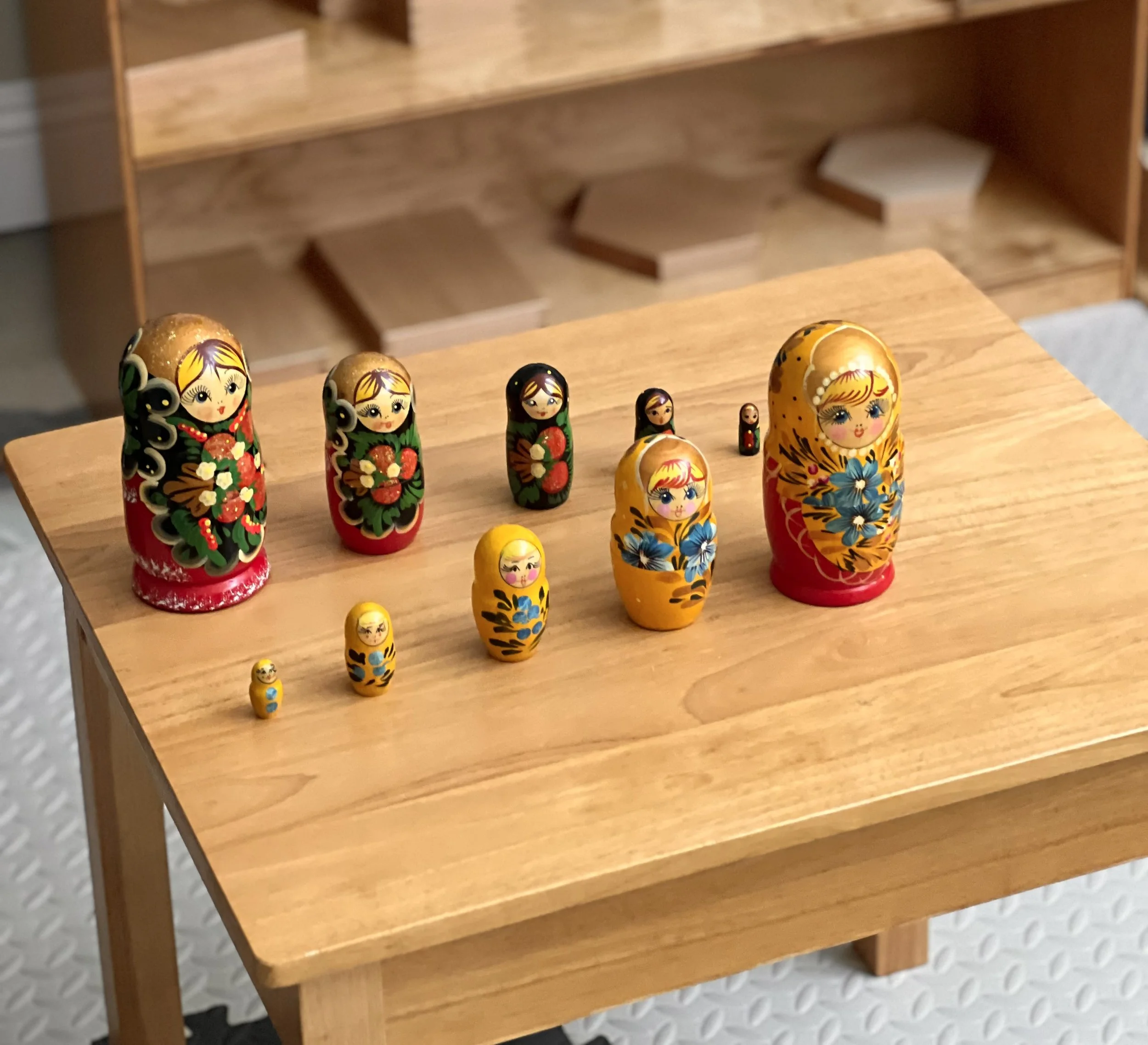
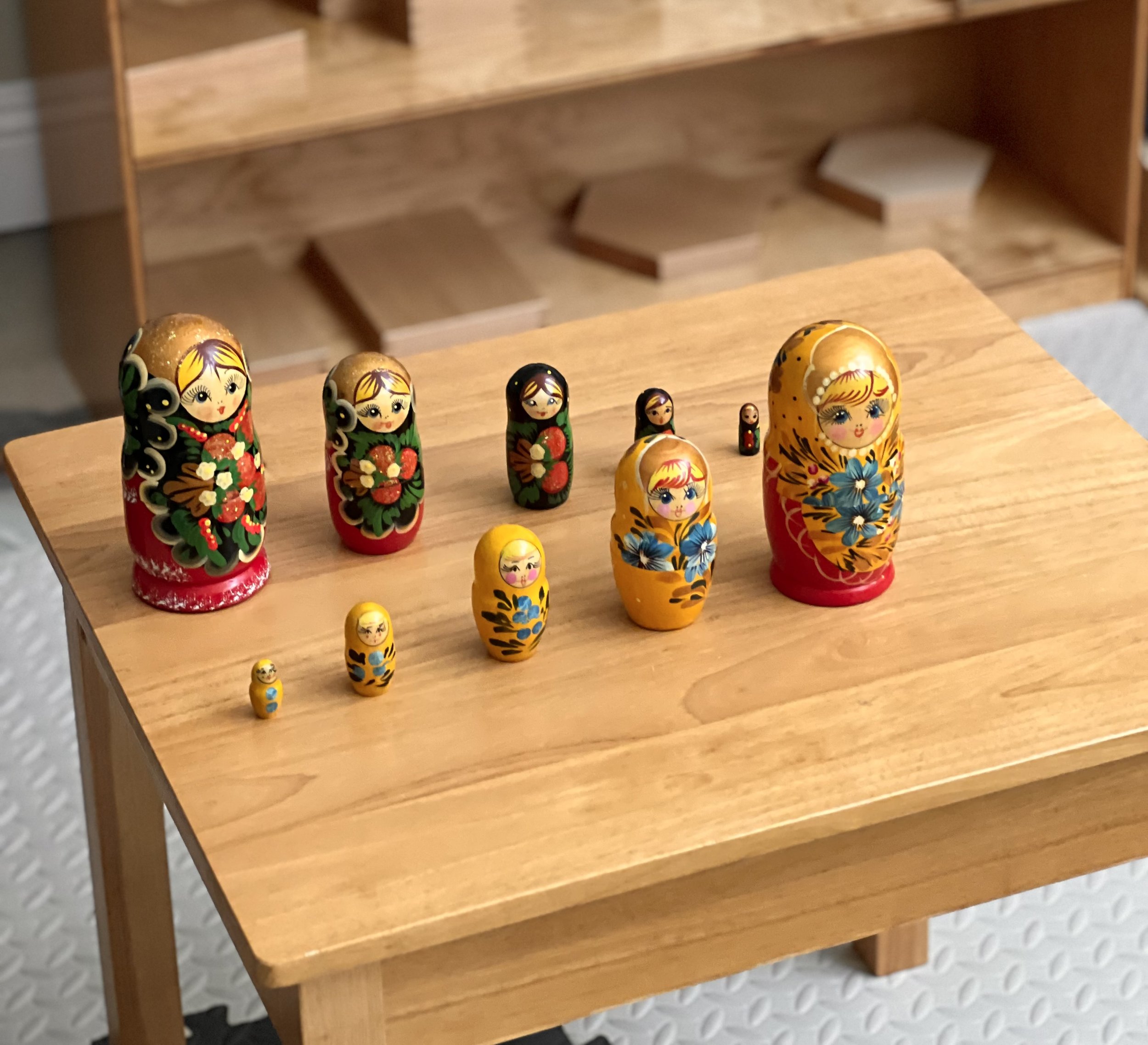
Following story exploration, children deepen their connection to language through Cultural Literacy, starting with engaging symbols like the Matryoshka dolls. These cultural touchstones are woven into books and stories, providing familiar and meaningful contexts for reading while celebrating Russian heritage. This approach emphasizes that literacy is not only academic—it is joyful, immersive, and culturally rich, helping children see reading as a gateway to both knowledge and delight.